The Furnace Warning Signs Aurora Homeowners Miss
Most furnace failures in Aurora announce themselves weeks before the breakdown — the trouble is that the early signals are easy to dismiss. A new rattle that fades, a pilot flame that has drifted from blue to yellow, a heating cycle that seems shorter than it used to be, a utility bill that creeps up without a weather change: each of these is your furnace asking for attention while the fix is still small. If any of them sound familiar, our heating repair service in Aurora can diagnose the cause before it turns into a no-heat night.
Run through this quick checklist:
- Sounds – banging, squealing, rattling, or persistent clicking after ignition
- Smells – anything beyond the brief dusty smell at season start: burning plastic, chemicals, or rotten eggs (gas — leave and call your utility)
- Flame color – a pilot light that burns yellow instead of blue signals incomplete combustion
- Cycling – the furnace turning on and off in short bursts instead of completing full heating cycles
- Airflow and evenness – weak air from vents, or some rooms cold while others are warm
- Bills – energy costs rising while your usage and the weather stay the same
Aurora’s climate makes early detection matter more than in milder places: furnaces here carry a heavy workload from October through April, so a component that is already marginal gets pushed over the edge exactly when you need heat most. The rest of this guide explains what each symptom means, which checks you can safely do yourself, and how to decide between repair and replacement.
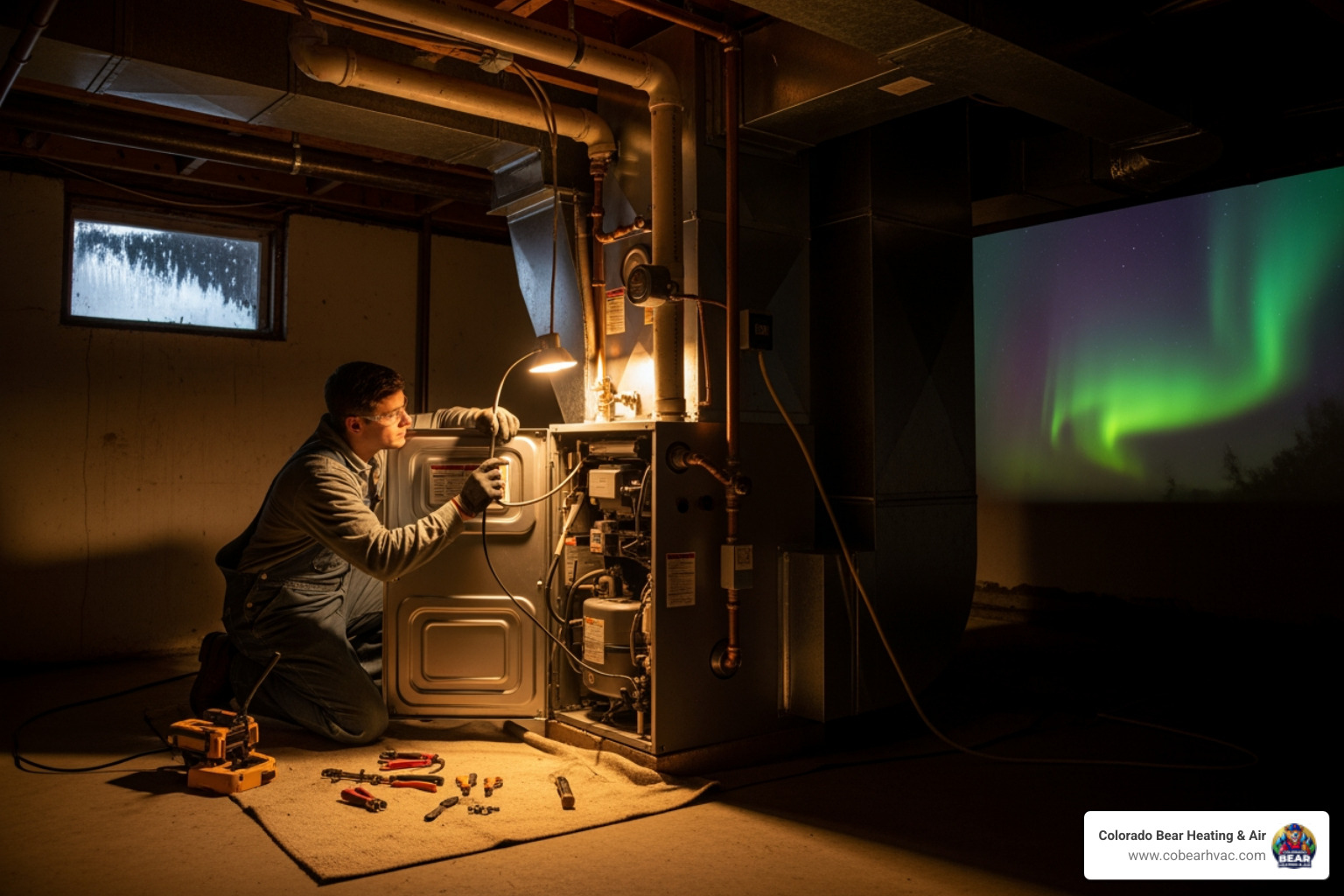
Telltale Signs Your Furnace Needs Attention
When your furnace starts acting up, it’s not just a minor inconvenience – it’s a cry for help! Ignoring these early warnings can lead to more serious problems or even a complete system breakdown when you need it most. We believe in proactive care, and that starts with recognizing the common signs that your furnace needs professional attention.
One of the most obvious indicators is strange noises. Furnaces are generally quiet workhorses, so any banging, squealing, rattling, or groaning sounds are definite red flags. These noises can indicate issues ranging from a loose fan belt to problems with the blower motor, or even components slamming against the furnace shell.
Next up are unusual smells. While a slight burning dust smell when you first turn on the heat for the season is normal, persistent or strong odors are not. A rotten egg smell, for instance, could signal a gas leak – a serious safety concern that requires immediate action. Electrical burning smells might point to faulty wiring, another fire hazard. Musty odors can indicate mold or mildew buildup in your system.
Insufficient heat or uneven heating throughout your home is another common complaint. If your furnace is running but not adequately warming your living space, or if some rooms are cold while others are stifling, it’s a sign of inefficiency or a malfunction. This could be due to a dirty filter, a faulty thermostat, or a more complex internal issue. When your heater is blowing cold air in Aurora, CO, it’s time to call for emergency repair.
Frequent cycling, where your furnace turns on and off rapidly, is often referred to as “short cycling.” This indicates that your furnace isn’t completing a full heating cycle, which can be caused by an oversized unit, a clogged filter, or an issue with the heat exchanger. Short cycling puts unnecessary stress on your system, leading to premature wear and tear.
Finally, keep an eye on your utility bills. If you notice higher energy bills despite consistent usage and outdoor temperatures, your furnace might be working harder than it should to maintain comfort. This decreased efficiency is a clear sign that something isn’t right and your system needs a check-up.
The benefits of prompt furnace repair are numerous. Timely repairs ensure your comfort during cold temperatures, prevent minor problems from escalating into major ones, extend the lifespan of your unit, and improve energy efficiency. Conversely, delaying service risks worsening the problem, leading to an unexpected breakdown during peak winter, and potential safety hazards. We’ve seen how a small, easily fixable issue can snowball into a complete system overhaul if ignored.
Common Issues in Different Furnace Types
Understanding the type of furnace you have can help you anticipate potential issues. While many problems are universal, each furnace type has its quirks.
Gas furnace problems are quite common in Aurora, given their widespread use. A critical component in gas furnaces is the heat exchanger. This part safely transfers heat from the flame to the air circulated in your home. If a cracked heat exchanger develops, it can allow dangerous carbon monoxide to leak into your living space, posing a serious safety risk. In some cases, replacing the entire furnace is a safer and more practical option than a major repair. Other common gas furnace issues include pilot light problems, ignition failures, and issues with the gas valve.
Electric furnace issues often revolve around the heating elements, which can wear out over time. Problems with the blower motor, which circulates heated air, are also prevalent. Electric furnaces don’t have the same carbon monoxide risks as gas furnaces, but electrical issues can lead to fire hazards if not addressed promptly.
While less common in residential Aurora, oil furnace needs can include issues with the oil burner, fuel supply, and the need for regular cleaning due to soot buildup. Oil furnaces burn hotter than gas furnaces, but their maintenance needs can be more intensive. Regardless of your furnace type, a common failure point across all systems is the blower motor. This essential component is responsible for moving air through your ductwork. A failing blower motor can lead to weak airflow, strange noises, or your furnace blowing cold air. We also often see issues with the blower capacitor, which regulates airflow. A dead blower capacitor can be dangerous, as it prevents the heating element from cooling down, increasing fire risk.
When to Call for Aurora Furnace Repair
Knowing when to pick up the phone is crucial. Here’s a list of scenarios where calling a professional for Aurora furnace repair is highly recommended:
- Banging or Squealing: Loud banging sounds can be caused by the blower slamming against the furnace shell or restricted airflow. Squealing often points to a faulty bearing in the blower assembly.
- Clicking Noises: While a few clicks during startup are normal, persistent clicking after ignition or during operation can signal a failing ignition system or other mechanical issues.
- Yellow Pilot Light: If your furnace has a pilot light, it should burn blue. A flickering or yellow pilot light indicates incomplete combustion, which can produce carbon monoxide. This is a serious safety concern.
- Water Leaks: Puddles around your furnace can be normal for high-efficiency condensing furnaces (due to condensation), but they can also signal a clogged condensate drain, a damaged heat exchanger, or other internal problems. If you notice any signs of water leaking, turn off your furnace and call for service as soon as possible.
- Furnace Blowing Cold Air: If your furnace is running but only cold air is coming out, it could be a simple thermostat setting, a dirty filter, or a more complex problem like a faulty heating element or a dead blower motor. For more details on this specific issue, check out our guide on heating blowing cold air in Aurora, CO.
- Persistent Strange Smells: Beyond the initial dusty smell, any persistent burning, chemical, or rotten egg odors demand immediate professional investigation.
- Furnace Won’t Start: If your furnace fails to ignite entirely, even after checking basic DIY steps, it’s time for an expert diagnosis.
- Frequent Breakdowns: If your furnace requires repairs year after year, it might be signaling the end of its lifespan.
Before You Call: Simple DIY Furnace Checks
We understand that a furnace malfunction can be stressful, and the first thought might be to immediately call for service. However, some common issues can be resolved with a few simple DIY checks, potentially saving you time and preventing an unnecessary service call. We always encourage homeowners to perform these basic troubleshooting steps before reaching out to us. This not only helps you understand your system better but can also prevent an unnecessary service call.
Basic Troubleshooting Steps for Homeowners
Before you make that call for Aurora furnace repair, try these quick checks:
- Checking Thermostat Settings: This might seem obvious, but it’s a common oversight! Ensure your thermostat is set to “HEAT” and not “COOL” or “OFF.” Also, verify that the fan setting is on “AUTO” rather than “ON” (unless you specifically want continuous fan operation). Sometimes, a simple accidental reprogram or a dead battery in a digital thermostat can be the culprit.
- Inspecting and Changing the Air Filter: A dirty or clogged air filter is one of the most frequent causes of furnace problems. A blocked filter restricts airflow, forcing your furnace to work harder, which reduces efficiency and can lead to overheating or system shutdown. We recommend inspecting your furnace filter monthly and changing it every 1-3 months, or more frequently if you have pets, allergies, or a busy household. A clean filter ensures proper airflow and helps your furnace run efficiently.
- Checking the Circuit Breaker: If your furnace isn’t turning on at all, head to your electrical panel. Locate the circuit breaker labeled for your furnace (it might be labeled “FURNACE” or “HVAC”). If it’s tripped (usually in the middle position), flip it completely to the “OFF” position and then back to “ON.” If it trips again immediately, do not attempt to reset it repeatedly; this indicates a more serious electrical issue that requires professional attention.
- Ensuring Vents Are Open and Unobstructed: Make sure all supply and return air vents throughout your home are open and not blocked by furniture, curtains, or rugs. Restricted airflow can cause your furnace to overheat or distribute heat unevenly.
These basic checks are a great first line of defense. However, if these steps don’t resolve the issue, or if you encounter any safety concerns like gas smells or electrical issues, it’s always best to call a professional. For more tips on navigating heating issues, especially during an emergency, consult our 24/7 heating repair Aurora tips.
Key Considerations for Aurora Furnace Repair vs. Replacement
Deciding whether to repair or replace your furnace is a significant decision for any homeowner in Aurora, CO. It’s not always straightforward, and it involves balancing short-term fixes with long-term reliability and energy efficiency. We aim to help you make the right decision for your home.
Several factors influence this choice. First, the age of your furnace plays a crucial role. The average lifespan of a gas furnace, with regular maintenance, is typically 15-20 years. Furnaces older than 10-15 years are often recommended for replacement, as they tend to become less efficient and more prone to breakdowns.
Another consideration is the frequency and severity of repairs. If your furnace requires frequent or major repairs, replacement might be the smarter choice. We’ve seen situations where delaying furnace repairs leads to more significant issues over time, making a new installation a better long-term solution.
Energy efficiency is also a major factor. Older furnaces are significantly less efficient than modern, energy-efficient models. A new, highly efficient furnace can improve your home’s overall energy performance, which is particularly beneficial given Aurora’s cold winters.
For a deeper dive into these considerations, our furnace repair Centennial guide offers valuable insights that apply across our service areas.
When to Repair Your Furnace
We always prioritize repairs first. If your system can be fixed effectively, we’ll repair it rather than replace it. Here are situations where repairing your furnace makes the most sense:
- Minor Component Failure: If the issue is a relatively small part, like a faulty sensor, flame sensor, or ignitor, and the overall system is in good condition, a repair is usually the best option.
- Unit is Under 15 Years Old: If your furnace is still relatively young (under 10-15 years), it likely has many years of reliable service left, making repair a wise decision.
- Isolated Repair Need: If it’s an isolated incident and the repair is not extensive, fixing the specific problem is generally preferred.
- System Efficiency Is Still High: If your furnace is still operating efficiently and effectively heating your home, a repair to fix a specific problem can extend its life without sacrificing performance.
When to Consider Furnace Replacement
Sometimes, a furnace reaches a point where repair is no longer the most practical solution. Here’s a table outlining criteria for when replacement becomes a strong consideration:
| Criteria | When to Repair | When to Consider Replacement |
|---|---|---|
| Age | Under 10-15 years old | Over 15-20 years old |
| Repair Frequency | Infrequent, isolated issues | Frequent breakdowns, recurring service calls |
| Efficiency | Still heating adequately, consistent performance | Declining performance, uneven heating, constant cycling |
| Safety | No major safety concerns | Cracked heat exchanger, carbon monoxide risks, fire hazards |
| Repair Severity | Minor component failure (e.g., sensor, ignitor) | Major component failure (e.g., heat exchanger, blower motor) |
Specifically, you should consider replacement if:
- Your Furnace is Over 15-20 Years Old: As furnaces age, they lose efficiency and become more prone to breakdowns. Beyond this age, parts can become obsolete, making repairs difficult.
- Frequent Breakdowns: If you find yourself calling for Aurora furnace repair every winter, this may signal the need for a new, reliable system.
- Rising Energy Bills: A significant and unexplained increase in your heating costs is a clear sign that your furnace is losing its efficiency and struggling to heat your home.
- Major Component Failure: Issues like a cracked heat exchanger or a failing blower motor are major repairs. In the case of a cracked heat exchanger, replacing the entire furnace is often the recommended and safer solution due to carbon monoxide risks. If a system is beyond repair, or if the required repairs are extensive, replacement with a modern, energy-efficient model is often the best choice for long-term reliability and peace of mind.
The Power of Prevention: Maintenance and Safety in Aurora, CO
Just like your car needs regular oil changes, your furnace needs annual tune-ups to operate safely and efficiently. In Aurora’s demanding climate, proactive maintenance is not just a suggestion; it’s a necessity. We believe that proper maintenance is the backbone of a reliable heating system, extending its lifespan, preventing extensive repairs, and most importantly, ensuring safe operation for your family.
Preventive maintenance can significantly extend the life of your HVAC system. Furnaces that are not maintained simply don’t make it to the end of their expected working life. We understand that life gets busy, but scheduling that annual check-up can save you a lot of headaches in the long run. Our comprehensive heating services in Centennial, CO, emphasize the importance of this proactive approach.
How Regular Maintenance Helps
Regular furnace maintenance offers a multitude of benefits that directly impact your comfort, wallet, and safety:
- Improved Energy Efficiency: Over time, dust, grime, and wear and tear reduce your furnace’s efficiency. A well-maintained heating system performs more efficiently, consuming less fuel to produce the same amount of heat. By keeping your furnace running at peak performance, less energy is wasted.
- Validating Manufacturer Warranties: Many furnace manufacturers require proof of regular professional service to keep your warranty valid. Skipping annual maintenance could void your warranty, leaving you without coverage for future repairs. Our maintenance programs ensure you have the necessary documentation.
- Fewer Emergency Calls: Annual tune-ups allow technicians to identify and address minor issues before they escalate into major breakdowns. This significantly reduces the likelihood of an unexpected furnace failure on the coldest day of the year, preventing those stressful emergency Aurora furnace repair calls. This proactive approach is a cornerstone of our heating repair in Centennial, CO.
Mitigating Potential Safety Risks
Beyond efficiency and longevity, furnace maintenance is critical for safety. A malfunctioning furnace can pose serious risks to your household:
- Carbon Monoxide Dangers: Gas furnaces produce carbon monoxide (CO) as a byproduct of combustion. A cracked heat exchanger, a common issue in older or poorly maintained gas furnaces, can allow this odorless, colorless, and deadly gas to leak into your home. Carbon monoxide poisoning can lead to illness, hospitalization, or even death if undetected. Professional safety checks during maintenance include inspecting the heat exchanger and ensuring proper ventilation to prevent CO leaks.
- Gas Leak Symptoms: If you smell a rotten egg odor near your furnace, it could indicate a natural gas leak. This is extremely dangerous and requires immediate action: turn off your furnace, evacuate your home, and call your gas provider and a professional HVAC technician immediately.
- Fire Hazards from Faulty Wiring: Electrical components in furnaces can wear out over time, leading to frayed wires or loose connections. These can create sparks or excessive heat, posing a significant fire hazard. During maintenance, technicians inspect electrical connections for wear and tear.
- Importance of Professional Safety Checks: Our trained technicians conduct thorough safety inspections during every maintenance visit, checking for potential gas leaks, proper ventilation, and the integrity of your system’s components. We ensure that safety controls are functioning correctly, providing you with peace of mind. For general safety guidelines, we often refer to resources like the EPA safety guidelines.
What to Look for in a Reputable Furnace Repair Company
When your furnace needs attention, choosing the right repair company in Aurora, CO, is paramount. You want a team you can trust, one that provides honest, reliable service and gets the job done right the first time. The peace of mind that comes from knowing your heating system is in capable hands is invaluable, especially during our chilly Colorado winters. We pride ourselves on being that trusted expert for Aurora furnace repair.
We understand that you have many choices, but not all HVAC providers are created equal. When researching companies for your heating needs in Aurora, CO, look beyond just the basic service offering.
Key Qualities of a Top HVAC Provider
Here’s what we believe sets a top-tier furnace repair company apart:
- Proven Expertise: Look for a company with a solid track record in the HVAC industry. Our technicians have encountered and successfully resolved nearly every furnace issue imaginable and have deep knowledge of heating systems specific to our climate.
- 24/7 Emergency Availability: Furnace breakdowns rarely happen at a convenient time. A reliable company offers 24/7 emergency service, ensuring that you’re never left in the cold, no matter the hour or day. Quick response times are crucial when temperatures drop.
- Positive Customer Reviews: What do other homeowners say? Check online reviews and testimonials. A company with a long list of happy customers and high ratings indicates a commitment to customer satisfaction and quality service.
- Licensed and Insured Technicians: Always ensure that the technicians working on your furnace are fully licensed and insured. This protects you in case of any accidents or issues during the repair process and guarantees that the work is performed by qualified professionals.
- Transparent Approach: A trustworthy company provides clear explanations of the problem, outlines all available solutions, and offers transparent communication about the repair process. We believe in honest service with our customers’ best interests at heart, ensuring you understand the work being done.
- Service for All Furnace Types: Whether you have a gas, electric, or even an oil furnace, a top provider should have the expertise to repair and maintain all makes and models. This versatility means you won’t need to search for a new specialist if you change furnace types in the future. Our technicians are highly skilled across various heating systems, including ductless mini-split systems in Aurora, CO.
Conclusion
As we’ve explored, maintaining a functional furnace in Aurora, CO, is not just about comfort; it’s about safety and efficiency. From recognizing the telltale signs of a malfunctioning unit—like strange noises, unusual smells, or insufficient heat—to understanding the critical decision between repair and replacement, being an informed homeowner is your best defense against winter’s chill.
We’ve highlighted the importance of addressing issues promptly to prevent minor problems from becoming major, extensive repairs. We also digd into the specific needs of different furnace types and the situations that warrant a professional call versus a quick DIY check. Above all, we emphasize that proactive maintenance is key to extending your furnace’s lifespan, improving its energy efficiency, and mitigating potential safety risks like carbon monoxide leaks.
When it comes to choosing a repair company, look for proven expertise, 24/7 availability, positive customer feedback, licensed and insured technicians, and a transparent approach. These qualities ensure you receive reliable, trustworthy service for your Aurora furnace repair needs.
A functional furnace is indispensable in Aurora, CO. Don’t wait for a crisis to ensure your heating system is in top shape. If any of the warning signs above sound familiar, our heating repair team in Aurora can take a look — reach us at (720) 790-3765. We’re here to keep your home warm and safe all winter long.