Latest Blogs
Stay updated with our latest blog posts.



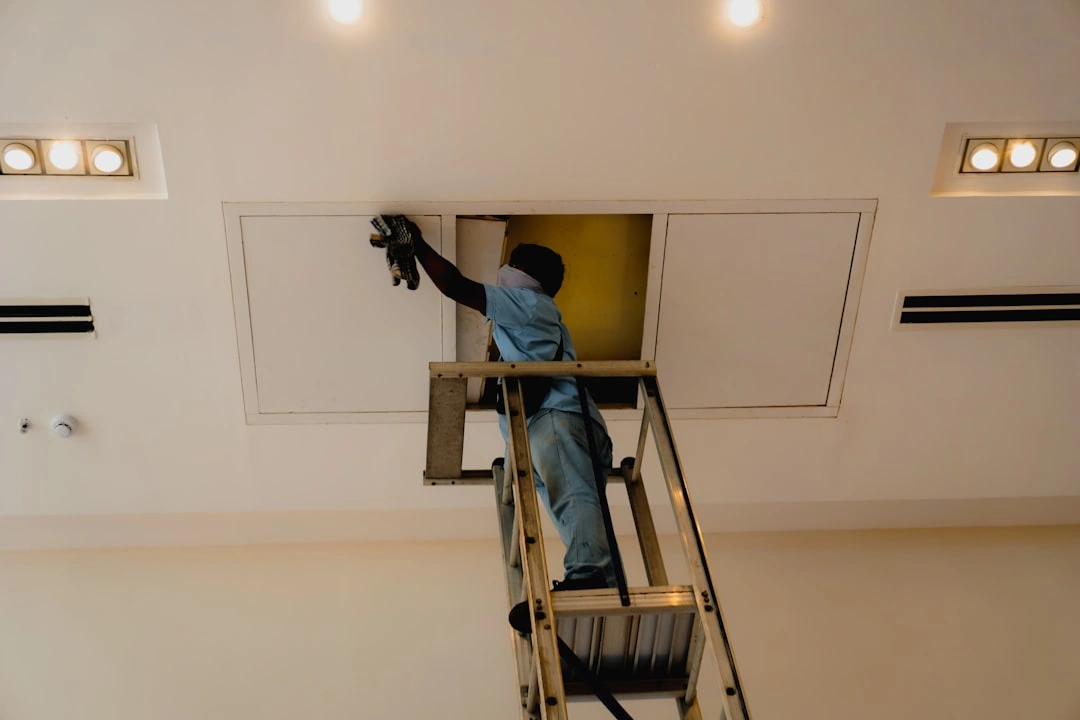

How improperly sized systems shorten equipment life is one of the most overlooked causes of early HVAC failure — and it's happening in homes across Colorado right now. Most homeowners expect a new system to last 15 to 20 years. But when the equipment is the wrong size for the home, that lifespan can be cut nearly in half, with many systems failing between years 8 and 10.
Here's a quick breakdown of how sizing errors cause premature failure:
Whether your system is too big or too small, the result is the same: components wear out faster, breakdowns become more common, and you may end up replacing equipment years ahead of schedule. In Colorado, where altitude, temperature swings, and dry conditions already put extra demands on HVAC equipment, getting sizing right is even more critical for reliable comfort.
When we talk about HVAC "sizing," we are not talking about the physical dimensions of the outdoor condenser or the indoor furnace. Instead, sizing refers to the system’s heating and cooling capacity, which is measured in British Thermal Units per hour (BTUh) or "tons."
One ton of cooling capacity is equivalent to 12,000 BTUh. This term historically comes from the amount of heat required to melt one ton of ice over a 24-hour period. If you have a 3-ton air conditioner, it can remove 36,000 BTUh of heat from your home.
For decades, many installations relied on the "square footage myth" — a rough rule of thumb like "one ton of cooling for every 500 square feet." This guesswork is highly inaccurate and frequently leads to incorrect sizing. Sizing a system correctly requires a deep understanding of your home's unique thermal dynamics, which includes:
To understand how these factors directly influence your indoor environment, you can read more about How Proper HVAC Sizing Affects Comfort and Efficiency.
The core issue of how improperly sized systems shorten equipment life lies in the severe mechanical and thermal deviation from normal operating design. When an HVAC system is engineered, manufacturers design every bearing, electrical contact, motor winding, and compressor valve to operate within a specific cycle pattern.
Under normal conditions, a properly sized system should run for 10 to 20 minutes per cycle, cycling on and off roughly 2 to 3 times per hour on a typical day. This allows the system to distribute oil properly, warm up components gradually, and maintain balanced refrigerant pressures.
When a system is improperly sized, this balance is completely shattered, causing a massive reduction in equipment lifespan. A system that should easily serve your home for 15 to 20 years is often completely worn out by year 8 or 10. To put this in perspective for local homeowners, check out our guide on the Average Lifespan of an HVAC System in Colorado.
The table below outlines the drastic differences in operating conditions and wear patterns between properly sized, oversized, and undersized systems:
| Operating Metric | Properly Sized System | Oversized System | Undersized System |
|---|---|---|---|
| Cycles Per Day | 6 to 8 starts | 30 to 50 starts | 1 to 2 starts (runs continuously) |
| Average Cycle Length | 10 to 20 minutes | 3 to 7 minutes | Hours to non-stop operation |
| Wear Event Increase | Baseline (Normal wear) | 400% to 600% increase | Continuous high-load stress |
| Dehumidification | Excellent (Reaches stable coil temp) | Extremely poor (Shuts off too fast) | Moderate (Coil may freeze) |
| Typical Lifespan | 15 to 20+ years | 8 to 10 years | 8 to 10 years |
| Energy Use Impact | Balanced efficiency | Higher energy use from repeated startup surges | Higher energy use from constant operation |
When an air conditioner or furnace is oversized, it is essentially a sprinter forced to run a marathon in 10-yard bursts. Because the system has too much capacity, it rapidly floods your home with conditioned air, satisfies the thermostat in a mere 3 to 7 minutes, and abruptly shuts down. This destructive pattern is known as short cycling.
Short cycling acts as a direct catalyst for premature equipment failure due to several critical mechanical and electrical factors:
On the opposite end of the spectrum, an undersized system is like a compact sedan trying to pull a massive commercial trailer up a steep mountain pass. It simply lacks the mechanical capacity to satisfy the heating or cooling load of your home. During a hot summer afternoon in Denver or Castle Rock, an undersized air conditioner will run continuously for 18 to 24 hours without a break.
This nonstop operation leads to extreme wear through several distinct failure modes:
When sizing goes wrong, certain mechanical and electrical parts bear the brunt of the damage. Understanding which parts are most vulnerable can help you see why simple repairs are often just temporary fixes for a deeper sizing issue.
If you are experiencing frequent breakdowns of these key parts, it is highly beneficial to understand how routine HVAC repair supports long-term system reliability and when it's time to dig deeper into your system's sizing.
So, how do we prevent these premature failures and ensure your heating and cooling system lives a long, efficient life? The answer lies in the industry-standard design protocols established by the Air Conditioning Contractors of America (ACCA):
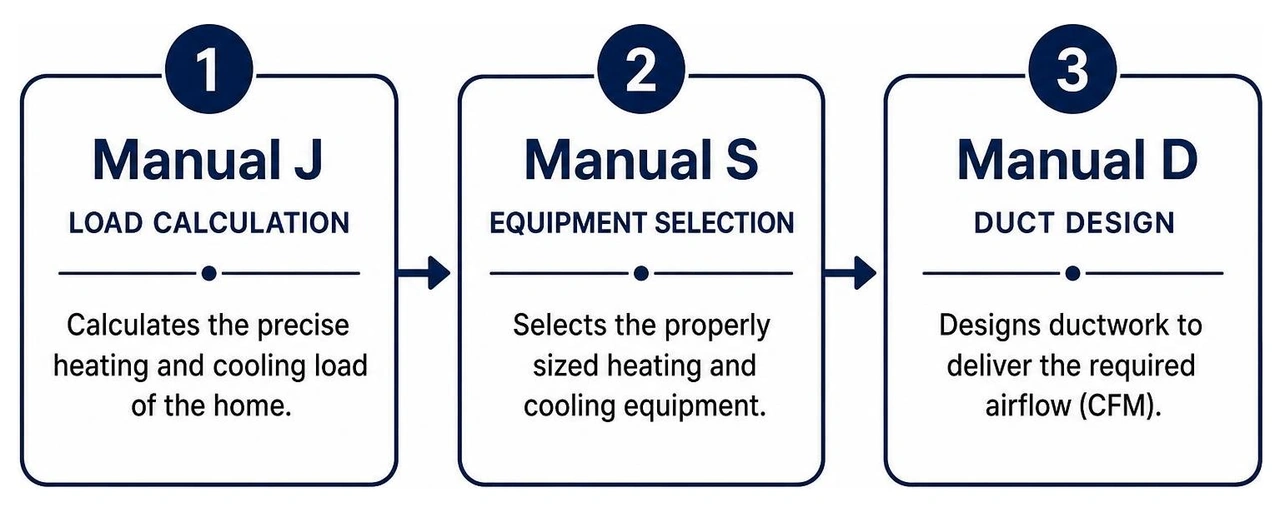
In high-altitude areas like Centennial, Littleton, Parker, and Highlands Ranch, altitude-adjusted Manual J calculations are non-negotiable. Thinner air reduces the heat-carrying capacity of your airflow, meaning a system installed without high-altitude calibration will behave as if it is undersized, running endlessly and wearing out prematurely.
Choosing to skip these professional calculations doesn't just shorten your equipment's life; it can also affect the protections that come with your system:
If you are currently dealing with an aging, mismatched system that is constantly breaking down, you may find our guide on When to Repair vs Replace Your HVAC System incredibly helpful. Investing in a properly sized system also brings incredible New HVAC Benefits Beyond Comfort, such as quieter operation, steadier comfort, and healthier indoor air.
For an oversized system, the most obvious sign is short cycling, where the unit turns on, blasts air for less than 10 minutes, and shuts off, leaving your home with uneven temperatures and high humidity. You may also notice loud, rushing air noises from your vents.
For an undersized system, the unit will run continuously on hot or cold days without ever reaching your thermostat's set temperature, resulting in weak airflow and higher energy use. If you notice these warning signs, check out our articles on Signs AC System Needs Replacement and Reasons to Consider Furnace Replacement.
No. While regular maintenance is essential, it cannot change the physical capacity of your equipment. Maintenance can keep your coils clean and electrical connections tight, which slightly reduces operating stress, but it cannot stop the mechanical damage caused by short cycling or constant running. It is like putting premium fuel into a car with a broken transmission; it keeps the engine clean, but it won't fix the underlying drive issue. To maximize the lifespan of your current system while you plan for a correct replacement, we recommend keeping up with Consistent AC Maintenance Extend Lifespan.
Before signing any contract for a repair or installation, protect yourself by asking these four critical questions:
At Colorado Bear Heating & Air, we believe in honest work done right the first time. We serve Castle Rock, CO, and the Denver Metro area — including Littleton, Highlands Ranch, Parker, Centennial, and surrounding communities — with fast, reliable comfort service and a customer-first approach built on over 20 years of local experience.
We know the unique challenges that Colorado's altitude and climate place on your heating and cooling systems. Our licensed, factory-certified technicians use precise Manual J calculations and careful system commissioning to ensure your home's HVAC system is the right fit.
From AC repair, replacement, and installation to furnace service, heat pumps, ductless mini-splits, water heater installation and replacement, air purification, and humidification, Colorado Bear Heating & Air helps homeowners and light-commercial customers enjoy lasting comfort and healthier indoor air.
Don't let an improperly sized system quietly affect your comfort and reliability. Request professional HVAC services today. Proudly serving Castle Rock, Littleton, Highlands Ranch, and nearby Denver Metro communities.

Get a decision in seconds with no impact to your credit score.


Colorado Bear HVAC is truly the best contractors I have experienced since I moved into my house 30 years ago. I have been dealing with Joe and his crew for over 11 years now. They are a trustworthy, respectful, experienced crew who works with you and gives you a fair value. They just completed a big job replacing my A/C, gas furnace and condenser. They did an excellent job, no short cuts, made sure everything was functional, and cleaned up the area nicely before they left. No pressure to perform unnecessary service. You know when the job is done, you have received top notch professional service at a fair price.


I used Colorado Bear Heating and Air to replace two furnaces in my home. Nate was exceptional to work with. His team did a great job educating me along the way. He provided competitive pricing with 10 year warranties. They installed quickly and were just super great to work with. I’d highly recommend them.

Nate and Sam have been great to work with getting my home humidifier installed in a difficult space in my 1940s house. Their prices were very fair and I would heartily recommend Colorado Bear to anyone looking for a solid HVAC company.
.avif)
Thank you Nate for the promptness you guys gave my parent. They are 93 and can't get around and always getting cold, and I was at work called Nate and he had one of his guys there in like 2 hours which was outstanding my dad was very impressed with the professional and how quick he had it fixed. These guys are great all my family said we found us a new heating and ac company. Colorado Bear Heating & Air you have customers for life!!!! Thank You Again
Carla and the Barnes Family
.avif)
Colorado Bear Heating & Air saved the day! This morning my family and I woke up to frigid outside temperatures(1 degree F)…and no heat! Nate was great over the phone to help me check our furnace, then he sent Sam over to help get us back to warmer temps. They were so quick and helpful. Fortunately I did not have to keep my toddlers inside the house wearing snow suits all day. We are warm now, and so thankful!
.avif)

If you’re in Colorado Springs, The Mountains, or nearby areas, call us to confirm availability for installations.
.avif)