Latest Blogs
Stay updated with our latest blog posts.




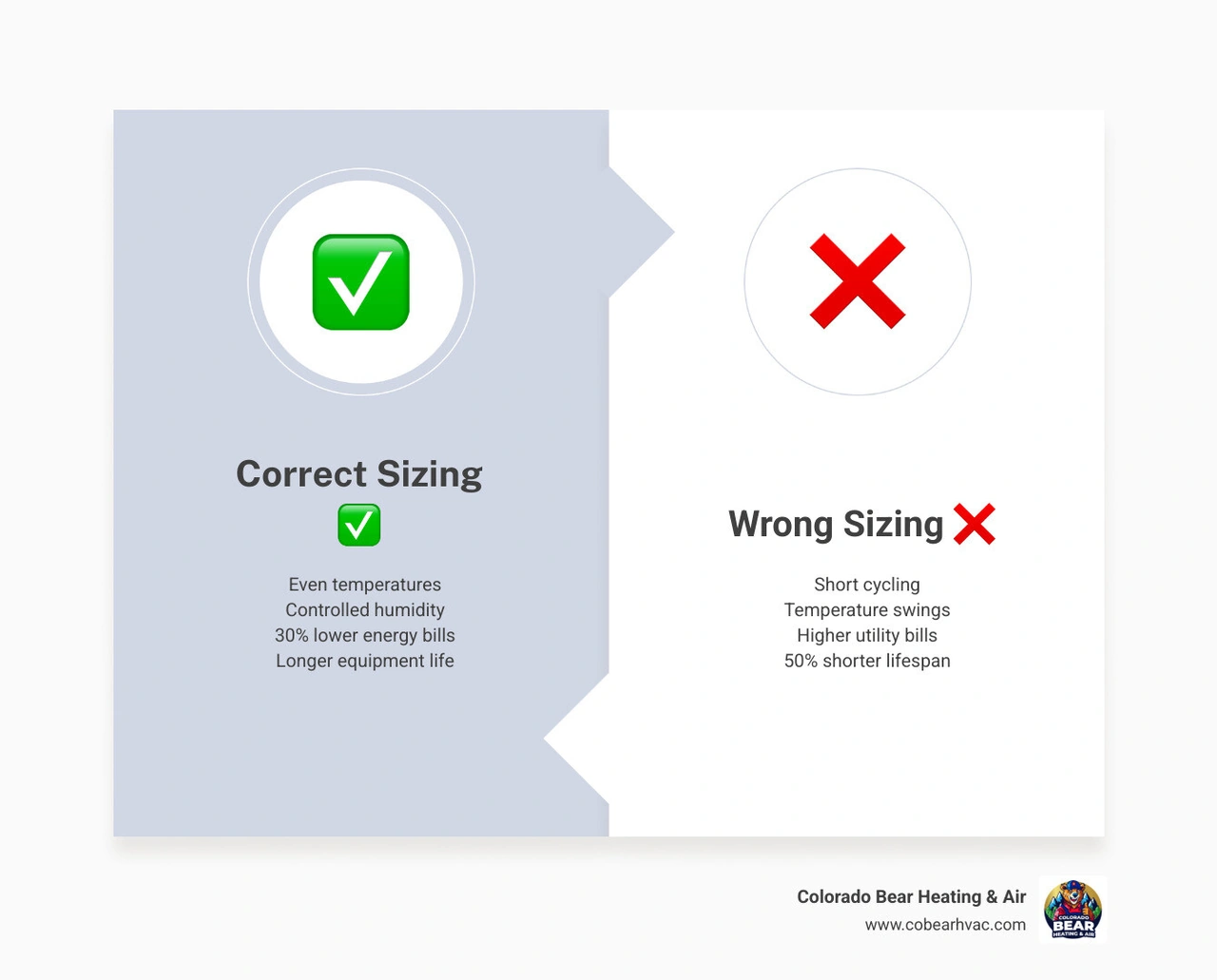
How proper hvac sizing affects comfort and efficiency comes down to one straightforward idea: a system that matches your home's actual heating and cooling load runs steadily, keeps every room comfortable, and uses far less energy than one that's too big or too small.
Here's a quick summary of what's at stake:
| Sizing Scenario | Comfort Impact | Efficiency Impact |
|---|---|---|
| Correctly sized | Even temperatures, controlled humidity, consistent airflow | Up to 30% lower energy bills, longer equipment life |
| Oversized | Short cycling, clammy air, 3–5°F temperature swings between cycles | Energy spikes on every startup, up to 50% shorter lifespan |
| Undersized | Constant running, hot and cold spots, up to 10°F variance between rooms | Higher utility bills, accelerated wear and tear |
Most homeowners focus on brand names or energy ratings when shopping for a new system. But according to the U.S. Department of Energy, more than half of U.S. homes already have HVAC systems that are either too big or too small — and that single mistake can drive energy bills up by as much as 30%.
In Colorado, the stakes are even higher. Between the altitude, the dry climate, dramatic temperature swings, and homes with high ceilings and large south-facing windows, sizing an HVAC system here isn't something you can guess at. Getting it right means real comfort, lower bills, and a system that lasts.
At Colorado Bear Heating & Air, we've seen what happens when a system is sized by guesswork versus sized by science — and the difference is significant for homeowners across Castle Rock, Littleton, Highlands Ranch, and the greater Denver Metro area.
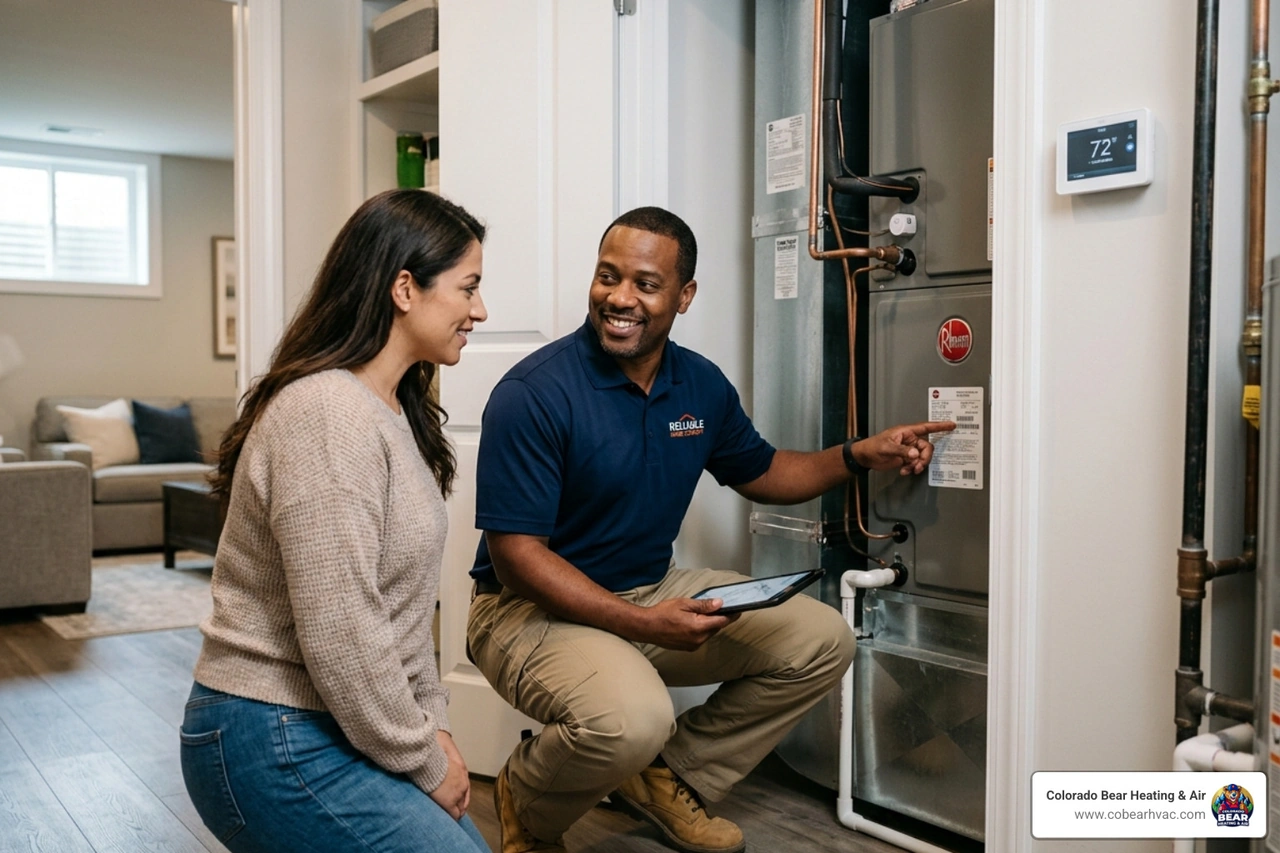
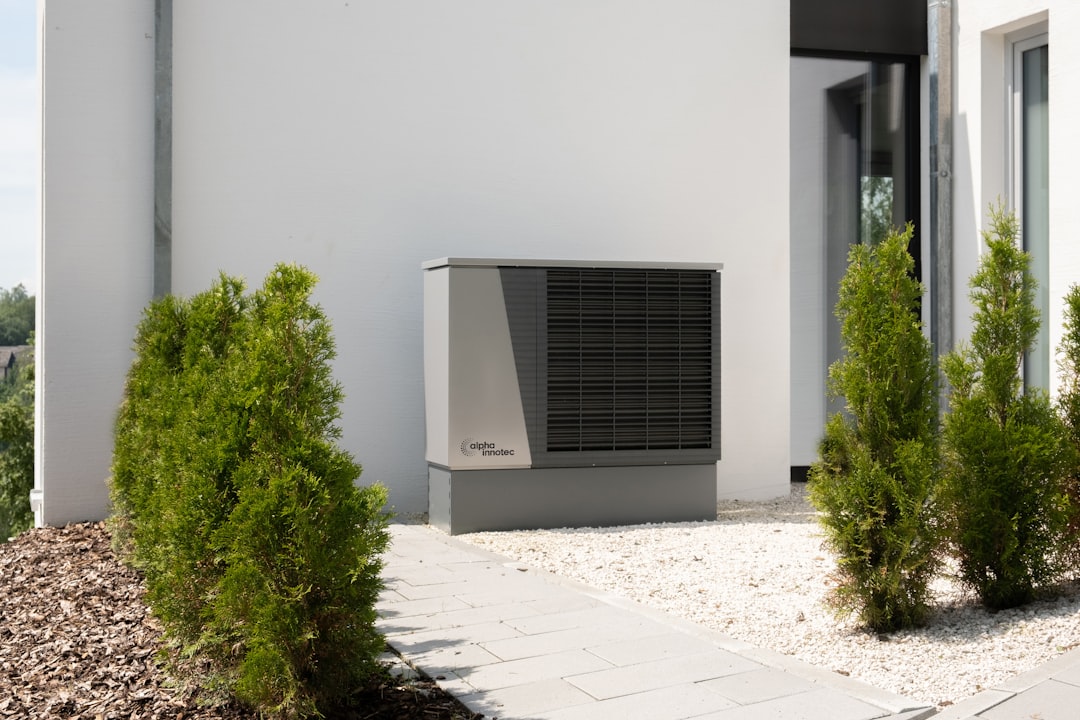
When we talk about HVAC "size," we aren't talking about the physical dimensions of the outdoor unit (though larger capacity units are often physically bigger). We are talking about the system's ability to move heat. In the HVAC world, we use two main units of measurement: BTUs and Tons.
A BTU (British Thermal Unit) is the amount of energy needed to raise the temperature of one pound of water by one degree Fahrenheit. In cooling terms, it’s about how much heat the unit can remove from your home. Tonnage is just a bigger way to measure BTUs. One "ton" of air conditioning capacity equals 12,000 BTUs per hour.
Fun fact: The term "ton" actually dates back to the days before electricity when buildings were cooled with literal tons of ice. One ton of AC capacity provides the same cooling power as one ton of ice melting over a 24-hour period.
So, how do we figure out if you need a 2-ton or a 5-ton system? We don't just look at your square footage and pick a number from a chart. That’s a recipe for disaster. Instead, the gold standard is the Manual J Load Calculation.
Developed by the Air Conditioning Contractors of America (ACCA), the Manual J is a scientific process that accounts for:
Skipping this step is like buying a pair of shoes without knowing your foot size—you might get lucky, but you’ll probably end up with blisters. For a system that fits perfectly, you need a professional HVAC Installation Castle Rock CO that starts with a real load calculation.
In the unique climate of the Colorado Front Range, how proper hvac sizing affects comfort and efficiency is a daily reality. Our region is famous for its "dry heat," but that doesn't mean humidity isn't a factor. In fact, managing indoor moisture is one of the primary jobs of your air conditioner.
When a system is sized correctly, it runs in long, steady cycles. This allows the cooling coils to stay cold long enough to pull moisture out of the air. In a properly sized home, you’ll enjoy:
Efficiency isn't just about the SEER2 rating on the box; it's about how that unit interacts with your home's specific "envelope." If the system is too big, it’s like using a sledgehammer to hang a picture frame. If it’s too small, it’s like trying to move a mountain with a teaspoon.
It’s a common myth that "bigger is better." Many homeowners think that if a 3-ton unit is good, a 4-ton unit must be great. This is one of the most expensive mistakes you can make.
The biggest problem with an oversized system is short cycling. Because the unit is too powerful, it blasts your home with cold air and reaches the thermostat's set point in just a few minutes. It then shuts off. A few minutes later, the temperature rebounds, and it kicks on again.
This rapid-fire operation leads to:
If you find yourself constantly adjusting the thermostat because you're shivering one minute and muggy the next, it might be time to evaluate When to Repair vs Replace Your HVAC System.
The "bigger is better" mentality fails to account for latent heat. While an oversized unit can quickly drop the air temperature (sensible heat), it fails to remove the heat stored in your furniture, walls, and flooring. This results in temperature swings of 3–5°F between cycles, making the home feel inconsistent.
Furthermore, the "fire hose through a straw" effect occurs when a high-powered unit is connected to ductwork that wasn't designed for that much airflow. This creates excessive noise and high static pressure, which can burn out your blower motor. Keeping your system in peak shape requires following a proper HVAC Services and Maintenance Guide.
On the flip side, an undersized system is equally frustrating. In places like Aurora or Littleton, summer temperatures can soar. An undersized unit will run 24/7, desperately trying to reach a temperature it simply isn't capable of hitting.
Signs of an undersized system include:
If your upstairs rooms are 10°F warmer than your basement, you likely have a capacity issue that requires a professional HVAC Service Castle Rock CO to diagnose.
During a Colorado July, your home faces an intense "heat gain." This isn't just about the outdoor temperature; it's about the sun beating down on your roof and through your windows. A professional load calculation considers your home's insulation R-values and window orientation (south-facing windows are heat magnets!).
Modern systems, like Daikin, offer variable-speed technology that can help bridge the gap. These systems can "throttle down" when the load is light and ramp up when the sun is at its peak. You can learn more about How Daikin Systems Perform in Colorado Climate to see how they handle our specific weather patterns.
Sizing an HVAC system in Centennial or Parker is different than sizing one in a sea-level city. As we get higher into the mountains, the air becomes less dense. This "thin air" has a direct impact on your HVAC equipment:
When we perform a load calculation, we don't just look at the floor plan. We look at the "envelope" of the home. A 2,000-square-foot home with 8-foot ceilings has a much smaller volume of air to treat than a 2,000-square-foot home with 12-foot vaulted ceilings. We also account for "internal heat load"—everything from your oven and dishwasher to your home office setup and the number of people in the house.
The most obvious sign is short cycling (turning on and off every 5-10 minutes), which usually points to an oversized unit. If the system runs for hours without the temperature dropping, it’s likely undersized. Other red flags include "clammy" indoor air, temperature variances of 10°F between rooms, and skyrocketing energy bills. Regular HVAC Maintenance Castle Rock CO can help identify these issues before they lead to a total breakdown.
Online calculators are "rules of thumb" that ignore the most important variables. They don't know if you have triple-pane windows or 1970s-era insulation. They don't account for Colorado's altitude or your home’s specific orientation to the sun. Using a generic estimate is a gamble that often leads to buying the wrong equipment. Choosing the Right HVAC Brand for Colorado is only half the battle; the other half is ensuring that brand is sized specifically for your walls and windows.
An HVAC system is like a car. If you only drove your car in heavy, stop-and-go traffic, the engine and brakes would wear out much faster than if you drove at a steady highway speed. A properly sized HVAC system "cruises" at a steady pace. By reducing the number of startups, we lower the mechanical stress on the compressor and electrical components. This is especially true for advanced equipment like Understanding Daikin HVAC Systems and Benefits, which are designed to modulate their output for maximum longevity.
At the end of the day, how proper hvac sizing affects comfort and efficiency is the difference between a home that feels like a sanctuary and one that feels like a source of constant frustration and high bills.
At Colorado Bear Heating & Air, we bring over 20 years of experience to every home in Castle Rock, Parker, Centennial, and across the Denver Metro area. We don't believe in "one-size-fits-all" solutions or guessing games. Our NATE-certified technicians use scientific load calculations to ensure your new system is "just right" - providing the perfect balance of comfort, humidity control, and energy savings.
Whether you are dealing with a "clammy" house, uneven temperatures, or bills that keep climbing, we are here to help. We pride ourselves on honesty, transparent communication, and doing the job right the first time.
Ready to experience the difference that a perfectly sized system can make? Whether you need a repair or a full HVAC Replacement Castle Rock CO, our team is standing by.
Contact us today for fast, reliable service in Castle Rock and the Denver Metro area!

Get a decision in seconds with no impact to your credit score.


Colorado Bear HVAC is truly the best contractors I have experienced since I moved into my house 30 years ago. I have been dealing with Joe and his crew for over 11 years now. They are a trustworthy, respectful, experienced crew who works with you and gives you a fair value. They just completed a big job replacing my A/C, gas furnace and condenser. They did an excellent job, no short cuts, made sure everything was functional, and cleaned up the area nicely before they left. No pressure to perform unnecessary service. You know when the job is done, you have received top notch professional service at a fair price.


I used Colorado Bear Heating and Air to replace two furnaces in my home. Nate was exceptional to work with. His team did a great job educating me along the way. He provided competitive pricing with 10 year warranties. They installed quickly and were just super great to work with. I’d highly recommend them.

Nate and Sam have been great to work with getting my home humidifier installed in a difficult space in my 1940s house. Their prices were very fair and I would heartily recommend Colorado Bear to anyone looking for a solid HVAC company.
.avif)
Thank you Nate for the promptness you guys gave my parent. They are 93 and can't get around and always getting cold, and I was at work called Nate and he had one of his guys there in like 2 hours which was outstanding my dad was very impressed with the professional and how quick he had it fixed. These guys are great all my family said we found us a new heating and ac company. Colorado Bear Heating & Air you have customers for life!!!! Thank You Again
Carla and the Barnes Family
.avif)
Colorado Bear Heating & Air saved the day! This morning my family and I woke up to frigid outside temperatures(1 degree F)…and no heat! Nate was great over the phone to help me check our furnace, then he sent Sam over to help get us back to warmer temps. They were so quick and helpful. Fortunately I did not have to keep my toddlers inside the house wearing snow suits all day. We are warm now, and so thankful!
.avif)

If you’re in Colorado Springs, The Mountains, or nearby areas, call us to confirm availability for installations.
.avif)