Why Understanding Heating System Diagnostics Matters for Your Home
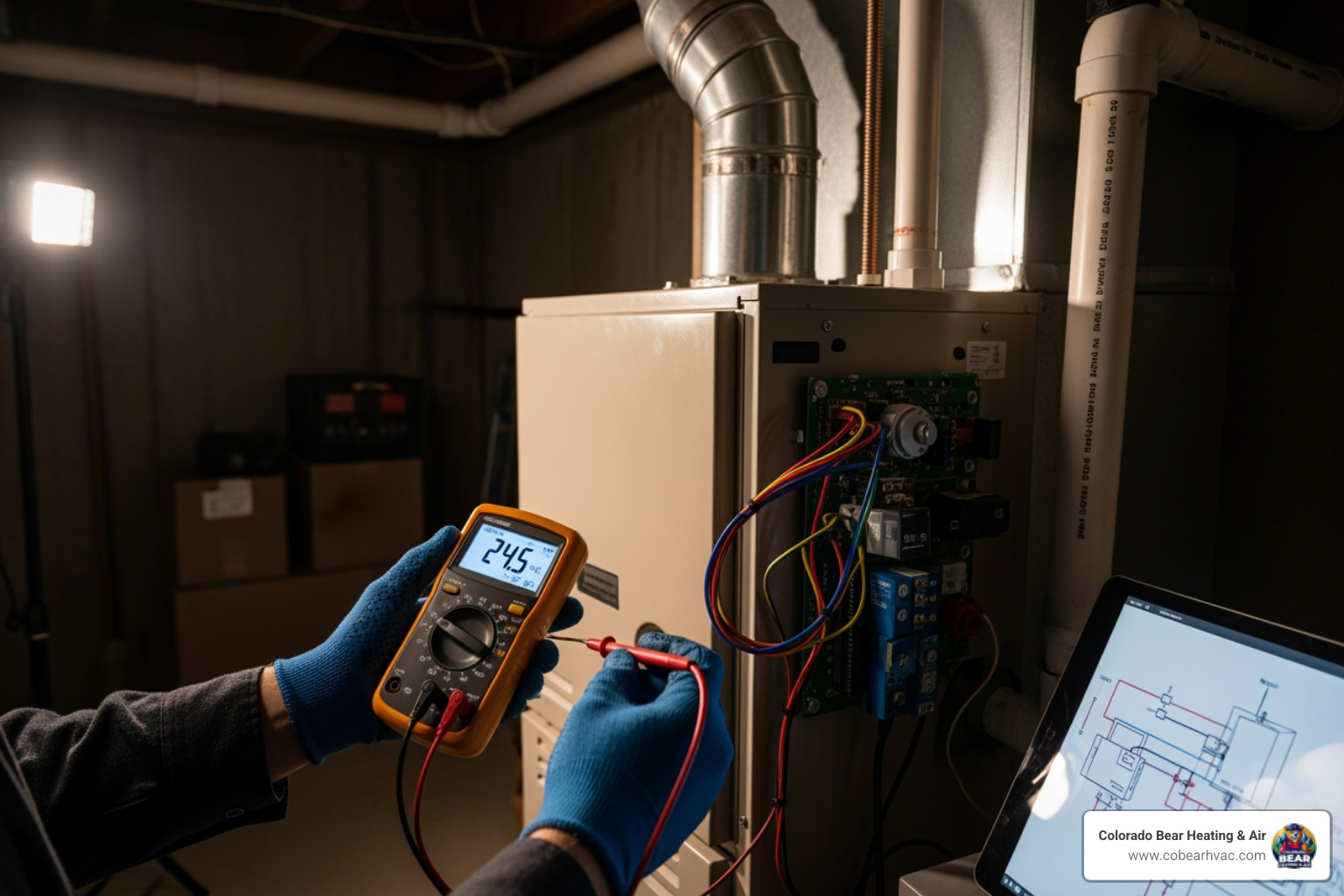
Heating system diagnostics is a comprehensive testing process that identifies what's going on when your heating or cooling system isn't running quite right. It's different from a routine tune-up—it's designed specifically to detect particular problems by examining your thermostat, blower motor, electrical wiring, ignition system, gas valve, heat exchanger, and other key components.
Quick Answer: What Heating System Diagnostics Covers
- Thermostat programming and calibration
- Electrical connections and voltage checks
- Blower motor and fan operation
- Ignition system and flame sensor inspection
- Gas valve and burner assembly
- Heat exchanger integrity
- Safety controls and pressure switches
- Airflow measurement and temperature rise
If you're experiencing cold spots in your home, strange noises from your furnace, or a system that won't turn on at all, understanding how diagnostics work helps you make better decisions about your heating system's care. Not addressing problems early can turn a loose wire today into a burned-out circuit board tomorrow—and what could have been a simple fix becomes an expensive emergency repair.
For homeowners in Castle Rock and the Denver Metro Area, knowing how to recognize warning signs and understand what happens during a professional diagnostic can save you from midnight emergency calls and extend your heating system's lifespan. Whether you're dealing with a furnace that won't start or just want to understand what's happening behind that access panel, this 30-day guide will walk you through everything you need to know.
If you're experiencing heating issues right now, learn more about heating repair services in Castle Rock or schedule a professional diagnostic to get expert help.
Week 1: Recognizing the Warning Signs Your Heater Needs Help
Before we even consider calling in the cavalry, the first step in mastering heating system diagnostics is learning to "speak furnace." Your heating system, whether it's a furnace, heat pump, or boiler, often gives subtle (and sometimes not-so-subtle) clues when it's not feeling its best. Paying attention to these common signs can help us catch problems early, potentially saving us from larger headaches and expenses down the road.
Here are the tell-tale signs that your heating system might be waving a white flag and needs a diagnostic:
- Unusual Noises: Is your furnace suddenly sounding like a haunted house orchestra? Clanging, banging, whistling, screeching, or persistent humming that's out of the ordinary can indicate various issues. A loose fan belt, a failing motor, or even an issue with the heat exchanger could be the culprit. Don't ignore these mechanical cries for help—they're often the first sign of trouble.
- Strange Odors: While a slight burning smell when you first turn on the heat for the season is normal (dust burning off), persistent or unusual odors are a red flag. A burning plastic smell could indicate electrical issues, while a sulfur or "rotten egg" smell points to a potential gas leak, which requires immediate attention and evacuation. Musty smells could suggest mold in your ductwork.
- Uneven Temperatures: Do some rooms feel like a sauna while others are an arctic tundra? Uneven heating means your system isn't distributing warmth effectively. This could be due to issues with airflow, ductwork, or even a malfunctioning component within the heating unit itself. We want consistent comfort throughout our homes in Castle Rock and the Denver Metro Area!
- Weak Airflow: If you stand by a vent and barely feel a whisper of warm air, your system has weak airflow. This often points to a clogged air filter, issues with the blower motor, or obstructions in your ductwork. Weak airflow makes your system work harder, reducing efficiency and potentially leading to premature wear and tear.
- High Energy Bills: A sudden, unexplained spike in your utility bills, especially if your usage hasn't changed, is a classic sign of an inefficient heating system. When components aren't working optimally, your system has to run longer and harder to achieve the desired temperature, consuming more energy in the process. This is often one of the most compelling reasons for homeowners to seek heating system diagnostics.
- Constant Cycling (Short Cycling): Does your heater turn on and off frequently, running for short bursts? This "short cycling" is inefficient and puts undue stress on your system's components, leading to faster wear. It could be caused by a clogged filter, an oversized system, or a faulty thermostat.
- Thermostat Not Responding: If you adjust your thermostat but your heating system seems to have a mind of its own, the thermostat itself or its connection to the system could be faulty.
Ignoring these signs is like ignoring a check engine light in your car—it might seem okay for a while, but eventually, you're looking at a breakdown. Addressing these issues with a timely diagnostic can prevent a minor problem from escalating into a costly emergency. For more insights on troubleshooting, you can refer to resources like How to Troubleshoot Your Home Heating System.
Week 2: The Homeowner's Pre-Call Checklist
Before you pick up the phone to call us for heating system diagnostics, there are several simple checks you can perform yourself. We often hear from homeowners who've tried changing filters or checking breakers, and while those are great first steps, there's a bit more to our DIY pre-call checklist. These quick inspections can sometimes resolve minor issues, saving you a service call, or at least provide valuable information that helps our technicians diagnose the problem faster.
The Role of the Thermostat in Heating System Diagnostics
Your thermostat is the brain of your heating system. If it's not sending the right signals, your furnace or heat pump won't know what to do.
- Check the Settings: This might seem obvious, but it's surprising how often the thermostat is simply set incorrectly. Ensure it's in "heat" mode, not "cool" or "off." Then, make sure the temperature setting is at least three degrees higher than the current room temperature. If your home is 68°F and your thermostat is set to 68°F, it won't activate.
- Fan Configuration: Is your fan set to "auto" or "on"? While "on" will run the fan continuously, "auto" will only run it when heat is being produced. If you're getting cold air when the fan is set to "on" but no heat, it points to a heating element issue, not a fan issue.
- Battery Check: Many thermostats run on batteries. If your screen is blank or unresponsive, try replacing the batteries.
- Proper Configuration: For any traditional whole home furnace, electric heat, or heat pump to work properly, the thermostat must be calling for heat and configured correctly. Consult your thermostat's manual to ensure its system settings match your home's specific heating setup. Sometimes, a simple reset can do wonders. If you're still unsure about thermostat issues, you can find more troubleshooting tips at InspectApedia Diagnose & Fix What's Wrong at Your Building.
Power and Fuel Supply Checks
No power, no heat—it's that simple!
- Circuit Breakers: Head to your main electrical panel. Look for any tripped breakers (usually halfway between "on" and "off") and reset them. Also, check for a dedicated circuit breaker near your outdoor heat pump unit, if you have one. Sometimes, a power surge can trip a breaker, cutting power to your entire system.
- Furnace Power Switch: Most furnaces have a power switch located on or near the unit itself, often resembling a standard light switch. It's easy to accidentally flip this switch off during cleaning or other activities. Make sure it's in the "on" position.
- Gas Valve Check (for Gas Furnaces): If you have a gas furnace, locate the gas line leading to the unit. There will be a shut-off valve on this line. Ensure the lever is parallel to the pipe, indicating the gas is "on." If it's perpendicular, the gas is "off." If you find it off, turn it on and see if your furnace fires up. If you smell gas at any point, leave the area immediately and call your gas provider and emergency services.
Airflow Fundamentals
Your heating system needs to breathe to work effectively.
- Dirty Air Filter: This is one of the most common culprits for heating issues! A clogged air filter restricts airflow, forcing your system to work harder, reducing efficiency, and potentially causing it to overheat and shut down. Check your filter monthly and replace it every 1-3 months, or more frequently if you have pets or allergies. A dirty filter can seriously impact your furnace's ability to operate properly.
- Blocked Vents: Walk around your home and ensure all supply registers are open and not blocked by furniture, rugs, or drapes. If vents are closed or obstructed, it can create back pressure and disrupt proper airflow throughout your system.
- Obstructed Returns: Your return air vents are just as important as your supply vents. Ensure they are clear of any obstructions, allowing your system to draw in air freely. Inadequate airflow due to covered returns or closed registers can significantly hinder your heating system's performance.
If you've checked all of these simple things and your heat is still not working properly, it's time to call in an accredited HVAC professional. We're always here to help homeowners in Castle Rock, Denver, and the surrounding communities of Monument, Elizabeth, Larkspur, Castle Pines, Parker, Sedalia, Aurora, Littleton, Highlands Ranch, Lone Tree, Centennial, and Franktown.
Week 3: Understanding a Professional Heating System Diagnostics Service
When your heating system isn't just having a bad day but truly needs a deep dive to uncover its secrets, that's where a professional heating system diagnostics service comes in. Unlike the quick checks we can do as homeowners, a professional diagnostic involves specialized tools, extensive knowledge, and a systematic approach to pinpoint the exact cause of a problem.
What's Inspected During a Professional Heating System Diagnostics?
Our certified HVAC professionals don't just guess; we thoroughly inspect your system to get to the root of the issue. During a diagnostic, we perform a comprehensive system test, examining many components that work together to heat your home. Here's what we typically inspect:
- Thermostat Programming and Calibration: We verify that your thermostat is accurately reading the temperature and communicating correctly with your heating unit. We also check its programming for optimal efficiency and comfort.
- Electrical System: This includes inspecting all wiring and connections for signs of damage or loose contacts, checking capacitors and relays for proper function, and ensuring correct voltage. A loose wire today can burn out a circuit board tomorrow, leading to more serious and costly issues.
- Blower Motor and Fan Operation: We examine the blower motor for proper operation, listen for unusual noises or vibrations, and check the fan blades for dirt accumulation or damage that could impede airflow.
- Ignition System: For gas furnaces, we inspect the ignitor (hot surface ignitor or intermittent pilot) and its sequence of operation to ensure reliable startup.
- Flame Sensor: This critical safety component detects if a flame is present. We clean and test it to ensure it's functioning correctly, preventing gas from accumulating if the burner doesn't ignite.
- Gas Valve: We test the gas valve for proper opening and closing, ensuring it's delivering the correct gas pressure to the burners.
- Heat Exchanger: This is a vital component where combustion gases transfer heat to the air circulating through your home. We carefully inspect it for cracks, corrosion, or damage, which can lead to dangerous carbon monoxide leaks.
- Safety Controls: Heating systems are equipped with various safety controls, such as limit switches and pressure switches, designed to shut down the system if dangerous conditions arise. We test these to ensure they are functioning as intended.
- Refrigerant Charge and Leak Test (for Heat Pumps): If you have a heat pump, we check the refrigerant levels and inspect for any leaks, which can severely impact heating performance.
- Condensate Drains and Coils: For high-efficiency furnaces and heat pumps, we inspect the condensate drain lines for blockages and ensure the coils are clean.
- Airflow Measurement: We measure the airflow to ensure your system is moving air efficiently throughout your home, which is crucial for comfort and energy efficiency.
We use state-of-the-art diagnostic tools to pinpoint the exact cause of the problem, providing you with a detailed understanding of what’s wrong. This precision allows for targeted repairs, saving you both time and money in the long run. For a comprehensive overview of what goes into an inspection, you might find a Gas Furnace Inspection Checklist insightful.
Diagnostic vs. Tune-Up: What's the Difference?
It's common for homeowners to confuse a diagnostic with a tune-up, but they serve distinct purposes:
- HVAC Diagnostic: Think of a diagnostic as a detective mission. It's a comprehensive system test specifically designed to detect particular problems when your heating system isn't running quite right. We're looking for the root cause of a specific issue you're experiencing (e.g., no heat, strange noises, high bills). It's about problem-solving and identifying what's broken or malfunctioning.
- HVAC Tune-Up (Preventative Maintenance): A tune-up is like a regular check-up for your system. It's preventative care aimed at keeping your unit in working order, optimizing its performance, and preventing issues before they happen. During a tune-up, we clean components, lubricate moving parts, tighten electrical connections, and make minor adjustments to ensure your system is running efficiently and reliably. It's about proactive care to maintain efficiency and extend lifespan, rather than reacting to a specific problem.
While both are crucial for a healthy heating system, a diagnostic is typically performed when a problem exists, whereas a tune-up is part of a regular maintenance schedule.
What to Expect After the Service
After completing the diagnostic, our professional will provide you with a clear and detailed explanation of our findings. We'll walk you through:
- The Problem: What exactly is wrong with your heating system.
- The Cause: Why the problem occurred.
- Repair Options: A range of solutions, from immediate fixes to recommendations for long-term improvements or, in cases of units beyond repair, a heater replacement.
- Safety Warnings: If we identify any safety concerns, such as gas leaks or electrical hazards, we will inform you immediately and advise on necessary steps to ensure your household's well-being.
Our goal is to provide you with clear, no-pressure options, empowering you to make informed decisions about your home's comfort and safety. We believe in transparency and want you to understand precisely what’s happening with your system. For insights into the rigorous inspection standards that guide professionals, you can refer to documents like NSPIRE: Inspecting Heating Systems Job Aid.
Week 4: The Long-Term Benefits of Proactive Diagnostics
By now, you've learned to spot the warning signs and understand the thoroughness of a professional diagnostic. But why bother with heating system diagnostics if your system seems to be doing "okay"? The truth is, proactive diagnostics offer significant long-term benefits that extend beyond simply fixing a broken part. They are an investment in your home's comfort, your family's safety, and your financial well-being.
How Diagnostics Save You Money and Stress
Think of heating system diagnostics as your home's financial guardian. By identifying potential issues before they become major problems, diagnostics can save you time, money, and stress in several key ways:
- Emergency Repair Prevention: One of the biggest advantages is avoiding those dreaded midnight or weekend emergency repairs. These often come with premium service charges and can leave your family in the cold during critical times. Early diagnostics can catch a failing component before it causes a complete system breakdown.
- Component Protection: Diagnostics can prevent the repair or replacement of costly components such as compressors (in heat pumps) or heat exchangers (in furnaces). A small, unaddressed issue can quickly put undue strain on other parts, leading to a cascade of failures. Catching a loose wire today can prevent a burned-out circuit board tomorrow, saving you a substantial repair bill.
- Lower Utility Bills: A heating system that isn't running optimally is a system that's wasting energy. Malfunctioning components, even minor ones, can cause your unit to work harder and longer, leading to unnecessarily high energy bills. Diagnostics help restore your system to peak efficiency, reducing energy consumption and putting money back in your pocket.
- Extended System Lifespan: Regular checks help maintain the efficiency of your system, guaranteeing it doesn’t work harder than it needs to. This ultimately extends its lifespan, delaying the need for a costly full system replacement.
- Improved Home Safety: Diagnostics play a key role in detecting issues like faulty wiring or potential gas leaks that could compromise your system’s performance or even pose a serious risk to your household. By prioritizing these checks, you’re putting your family’s well-being first.
- Peace of Mind: Knowing your heating system has been thoroughly inspected and is running safely and efficiently provides invaluable peace of mind. You can rest easy, especially during the harsh winters we experience in Castle Rock and the Denver Metro Area.
The Impact of Your Home on Heating Performance
It's easy to blame the heating system for all comfort issues, but sometimes, the problem lies not with the heater itself, but with the home around it. External factors significantly affect heating system performance:
- Home Insulation: Poor insulation in walls, attics, and floors allows heat to escape, making your heating system work overtime to maintain a comfortable temperature. This can lead to higher energy bills and an overworked system.
- Air Leaks: Drafty windows, poorly sealed doors, and cracks in your home's envelope are like open invitations for cold air to sneak in and warm air to escape. This constant battle against drafts makes your heating system less effective.
- Inefficient Ductwork: Your ductwork is the circulatory system of your home's heating. If it's leaky, poorly insulated, or improperly sized, a significant amount of heated air can escape before it even reaches your living spaces. Inefficient homes can cause trouble for your heating system and may minimize the impact that your heater can make on your home’s internal temperature. The air your heater produces can escape through poorly-sealed doors, windows, attics, ducts, crawlspaces, and more.
- Whole-Home Efficiency: Addressing these issues through whole-home energy solutions—like improving insulation, sealing air leaks, and ensuring your ducts are in good shape—can dramatically improve your heating system's performance, reduce strain on the unit, and lower your energy consumption. It’s a holistic approach to home comfort.
Understanding these external factors is crucial for comprehensive heating system diagnostics. Our technicians don't just look at the furnace; they consider how your entire home interacts with your heating system to provide the most effective solutions.
Frequently Asked Questions about Heating System Diagnostics
We often get asked similar questions by homeowners. Here are some of the most common ones:
How often should I have my heating system checked?
It’s typically recommended to have your HVAC system serviced at least once a year. However, we recommend scheduling service before the start of the heating season to ensure your system is ready for the demands of winter. This proactive approach helps catch potential issues early and ensures optimal performance when you need it most.
What are the most common reasons a furnace won't turn on?
From our experience, the most common reasons a furnace won't turn on include:
- Lack of Power: A tripped circuit breaker or the furnace's power switch being accidentally turned off.
- Thermostat Issues: Incorrect settings (e.g., set to "off" or "cool," or temperature set too low), dead batteries, or a faulty thermostat unit.
- Gas Source Off: For gas furnaces, the main gas valve to the unit might be closed.
- Airflow Problems: A severely clogged air filter or blocked vents can cause the system to overheat and shut down as a safety measure.
- Pilot Light/Ignition Failure: For older furnaces, a pilot light might be out. For newer ones, the electronic ignition system might be malfunctioning.
Can a dirty air filter really stop my heater from working?
Absolutely! A dirty air filter is a surprisingly common culprit behind heating system problems. It restricts the airflow your furnace needs to operate efficiently. This restriction forces your system to work much harder, leading to:
- Reduced heating capacity and weak airflow.
- Increased energy consumption and higher utility bills.
- Overheating of the furnace, which can cause the system to cycle on and off frequently (short cycling) or even shut down completely as a safety precaution.
- Premature wear and tear on components like the blower motor.
We always recommend checking and changing your air filter regularly—it's the simplest and most cost-effective maintenance task you can perform for your heating system!
Conclusion: Your Partner for a Warm and Safe Home
Mastering heating system diagnostics isn't about becoming an HVAC expert overnight; it's about empowering ourselves as homeowners to recognize issues, take initial steps, and understand the value of professional care. We've journeyed through recognizing warning signs, performing pre-call checks, understanding the depth of professional diagnostics, and appreciating the long-term benefits of a proactive approach.
Your heating system is a critical component of your home's comfort and safety, especially here in Castle Rock, Denver, and the surrounding areas where winter can be unforgiving. Prioritizing its health means greater efficiency, lower bills, extended lifespan, and, most importantly, peace of mind for your family.
At Colorado Bear Heating & Air, we are committed to being your trusted partner for a warm and safe home. With over 20 years of experience, a customer-first approach, and transparent practices, we are dedicated to providing prompt, reliable HVAC services. When you need expert heating system diagnostics or any heating service, you can count on us.
For more information on how we can help keep your home cozy and comfortable, explore our heating maintenance services today.