Does Your HVAC System Actually Hold Up Against Colorado's Brutal Winters?
How Daikin systems perform in Colorado climate is a question more homeowners are asking — and for good reason. Colorado doesn't play by normal weather rules. Denver can drop to -10°F overnight, then climb dramatically the next afternoon thanks to high-altitude sunshine. Add in thin air above 5,000 feet, dry conditions, and the occasional March blizzard, and you've got one of the most demanding HVAC environments in the country.
Here's the short answer, optimized for quick reference:
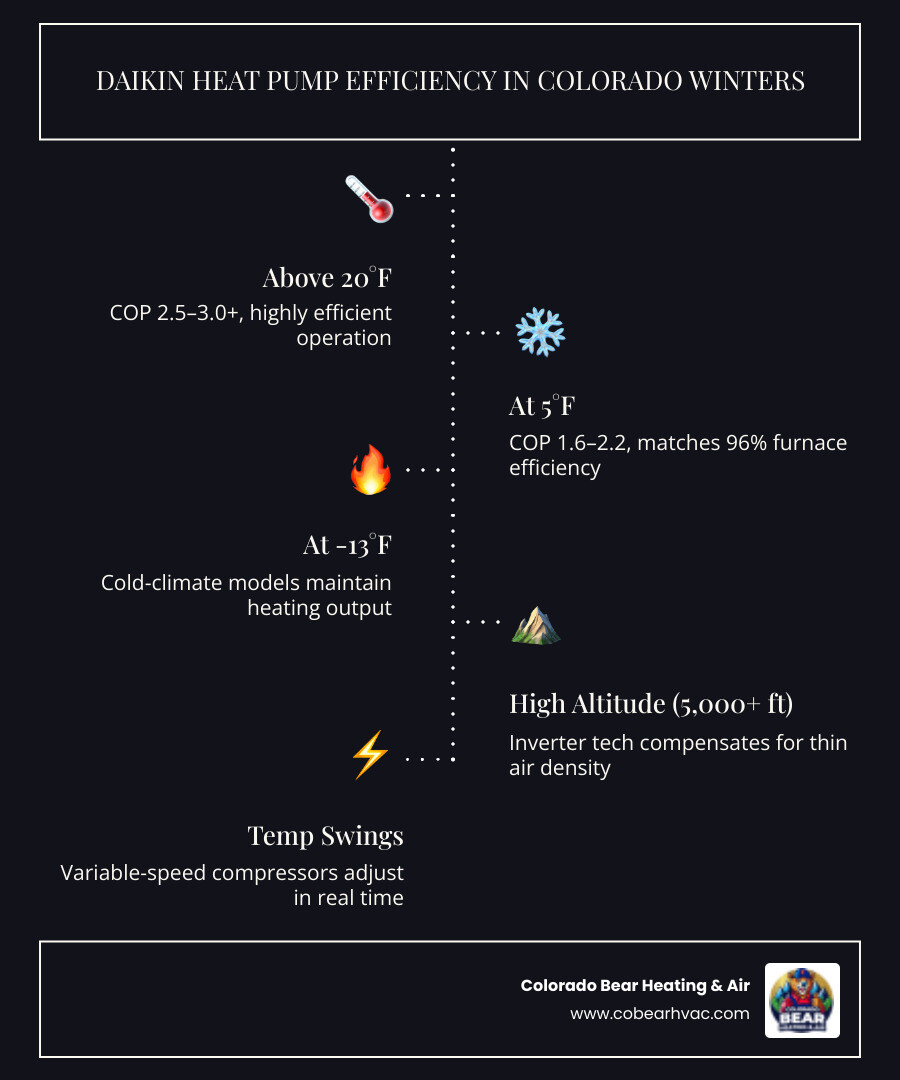
How Daikin Systems Perform in Colorado's Climate — At a Glance:
| Condition | Daikin Performance |
|---|---|
| Temperatures above 20°F | Excellent — COP of 2.5–3.0+, highly efficient |
| Temperatures at 5°F | Strong — COP of 1.6–2.2, cost-competitive with a 96% furnace |
| Temperatures at -13°F | Capable — cold-climate models maintain heating output |
| High altitude (5,000+ ft) | Compatible — inverter technology compensates for thinner air |
| Rapid temperature swings | Well-suited — variable-speed compressors adjust in real time |
| Extreme cold snaps (-10°F) | Best with hybrid dual-fuel backup for full reliability |
The reality is that older heat pump technology genuinely struggled once temperatures fell below 30–35°F. That gave Colorado homeowners good reason to stick with gas furnaces for decades. But modern Daikin cold-climate systems — equipped with inverter compressors, vapor injection technology, and R32 refrigerant — have fundamentally changed what's possible here on the Front Range.
In fact, about 80% of Denver's winter heating demand occurs at temperatures above 20°F, where today's Daikin heat pumps run circles around conventional systems in terms of efficiency. For the remaining brutal cold snaps, hybrid dual-fuel setups bridge the gap without sacrificing comfort or driving up energy bills.
Whether you're in Castle Rock, Highlands Ranch, or central Denver, understanding how these systems actually behave in Colorado conditions — not just on a spec sheet — is the key to making a smart long-term investment in your home's comfort.
How Daikin Systems Perform in Colorado Climate: The High-Altitude Advantage
When we talk about the "Mile-High Factor," we aren't just talking about baseball home runs. Altitude significantly impacts HVAC performance because the air is thinner. Traditional single-stage systems often struggle with this because they are either "on" or "off," leading to inefficient cycles and uneven temperatures.
Daikin addresses this through advanced Hvac/Inverter Technology Castle Rock Co. Unlike a standard compressor that works like a light switch, an inverter compressor works like an accelerator pedal in a car. It ramps up or down to meet the exact heating or cooling demand of the home. In our thin Colorado air, this precision allows the system to maintain consistent pressure and refrigerant flow, compensating for lower air density.
Furthermore, variable-speed compressors are essential for the Front Range because our homes often face high solar gain during the day and rapid cooling at night. Daikin systems don't just blast air; they modulate their output to keep your indoor environment steady, regardless of what the outdoor pressure is doing.
Engineering for Denver’s Drastic Temperature Swings
In communities like Littleton and Centennial, we often see "diurnal shifts"—fancy talk for the temperature swinging 40 degrees in a single day. This puts immense stress on Service/Air Conditioning units that aren't built for flexibility.
Daikin systems are engineered to handle cooling up to 114.8°F and heating down to sub-zero levels. Because the inverter technology can react instantly to these shifts, you don't get the "shock" to the system that occurs when a traditional furnace or AC tries to keep up with a sudden afternoon warm-up or a sunset cold front.
Optimizing How Daikin Systems Perform in Colorado Climate with R32 Refrigerant
One of the biggest shifts in the industry is the move toward more sustainable refrigerants. Daikin is a world leader here, utilizing R32 Freon in many of their modern systems. For Colorado homeowners concerned about Service/Indoor Air Quality and environmental impact, R32 is a game-changer.
Compared to older refrigerants, R32 has a much lower Global Warming Potential (GWP) and is more efficient at transferring heat. In a dry, high-altitude climate, every bit of heat transfer efficiency matters. R32 allows the system to carry more heat with less refrigerant, which leads to lower energy consumption and better performance when the mercury drops.
Cold-Weather Reliability: Heat Pumps vs. Traditional Furnaces
For years, the gold standard in Colorado was the 96% AFUE (Annual Fuel Utilization Efficiency) gas furnace. While furnaces are great at creating "hot" air, they do so by burning fuel. Heat Pump technology, conversely, moves heat from the outside in.
Modern Daikin units, like the 17 Series, offer a Heating Seasonal Performance Factor (HSPF) that makes them incredibly competitive. Even at 17°F, a Daikin cold-climate unit can maintain a Coefficient of Performance (COP) of 2.5 to 3.0. This means for every unit of electricity you put in, you get three units of heat out. Compare that to a furnace, which is always less than 1:1 (since some heat always goes up the flue), and you can see why service/heating conversations are shifting toward electrification.
| Metric | Daikin Cold-Climate Heat Pump | 96% Efficient Gas Furnace |
|---|---|---|
| Efficiency at 32°F | ~350% (COP 3.5) | 96% (AFUE) |
| Efficiency at 5°F | ~200% (COP 2.0) | 96% (AFUE) |
| Energy Source | Electricity (Renewable potential) | Natural Gas (Fossil fuel) |
| Comfort Feel | Consistent, steady airflow | Intense, hot bursts |
Performance at -13°F and Beyond
A common myth is that heat pumps stop working when it gets "really" cold. While that was true in the 1990s, modern Service/Heat Pump models are built for the Rockies. Specifically, Daikin’s cold-climate models (like the Aurora or 17 Series) are rated to provide reliable heat down to -13°F.
They achieve this through vapor injection technology. By injecting a small amount of refrigerant back into the compressor during the compression cycle, the system can maintain high discharge pressures even when the outdoor air is freezing. This ensures that even on those dark January mornings in Parker or Elizabeth, your home stays toasty.
Why Hybrid Dual-Fuel Systems Win in the Front Range
While a Daikin heat pump can handle 90% of a Colorado winter, we still recommend hybrid (dual-fuel) systems for many of our neighbors. A hybrid system combines a high-efficiency Daikin heat pump with a gas furnace backup.
Think of it like a hybrid car. The heat pump handles the "city driving"—the temperatures between 20°F and 60°F where it is incredibly efficient. When a polar vortex hits and temperatures plumet to -10°F, the system automatically switches to the gas furnace. This "switch point" can be optimized based on current utility rates or outdoor temperatures.
Real-world modeling, such as a study of a 54,000 sq. ft. office building in Denver, showed that these hybrid setups often result in the lowest annual utility costs and carbon emissions compared to pure electric or pure gas systems. It gives you the best of both worlds: the efficiency of an hvac inverter system and the raw power of gas heat for extreme emergencies.
Versatile Solutions for Every Colorado Home Layout
Not every home in the Denver Metro area has traditional ductwork. We see many historic bungalows in Denver and newer additions in Castle Pines that lack the space for bulky vents. This is where a Daikin Mini Split system shines.
Daikin is a global leader in VRV (Variable Refrigerant Volume) and VRF technology. These systems allow for multi-zone control, meaning you can heat the master bedroom to 72°F while keeping the guest room at 65°F. Our Service/Ductless Installation team frequently uses these to solve comfort issues in "problem rooms" like finished basements or sunrooms that the main furnace just can't reach.
Maximizing How Daikin Systems Perform in Colorado Climate through Home Improvements
To get the most out of a ductless or central Daikin system, we always recommend looking at the "envelope" of your home. Colorado’s dry, thin air makes it easy for heat to escape through tiny cracks.
Pairing a Hvac/Mini Split Heat Pump Castle Rock Co with improved attic insulation and air sealing can drastically improve performance. When your home holds onto the heat the Daikin system produces, the inverter can run at its lowest, most efficient speed, saving you money and reducing wear and tear on the equipment.
Winter Maintenance and Long-Term Investment Protection
To keep these advanced systems running at peak performance, a little winter TLC goes a long way. Colorado's heavy, wet snow can be a challenge for outdoor units. We recommend several services and habits to protect your investment:
- Clear the Perimeter: Always keep a two-foot radius around your outdoor unit clear of snow and ice.
- Snow Roofs: In areas like Larkspur or Monument that get heavy accumulation, a "snow roof" or shelter can prevent ice from falling directly into the fan blades.
- Monitor Defrost Mode: It is normal for your heat pump to occasionally emit steam or a "whooshing" sound in winter. This is the defrost mode melting ice off the coils. If the unit becomes completely encased in a solid block of ice, however, it’s time to call us.
- Warranty Registration: Daikin offers one of the best warranties in the business—a 12-year parts warranty on select systems. This provides incredible peace of mind for Colorado homeowners.
Professional Installation and High-Altitude Calibration
The most expensive HVAC system in the world will underperform if it isn't installed correctly. At Colorado Bear Heating & Air, we use Manual J load calculations to ensure your system is sized perfectly for your home's square footage, window orientation, and insulation levels.
High-altitude calibration is also vital. We adjust the fan speeds and refrigerant charges to account for the lower air density in the Denver Metro area. Proper drainage is another "must"—condensate lines must be routed and insulated so they don't freeze and back up into your home during a cold snap.
Frequently Asked Questions about Daikin in Colorado
Do Daikin heat pumps really work in sub-zero Denver temperatures?
Yes! While older models struggled, Daikin's cold-climate series are specifically designed to provide effective heating down to -13°F. For temperatures lower than that, we often recommend a hybrid dual-fuel setup to ensure you are never without heat during a record-breaking freeze.
What maintenance is required for a Daikin system during a Colorado winter?
The most important task is keeping the outdoor unit clear of snow and ice buildup. You should also check your filters monthly, as Colorado’s dry air can lead to more dust accumulation. We recommend a professional "winterization" check-up to ensure your defrost cycle and backup heat strips (if applicable) are functioning correctly.
Are there rebates available for installing Daikin systems in the Denver Metro area?
Absolutely. Many Daikin systems qualify for federal tax credits under the Inflation Reduction Act (up to $2,000 for qualified heat pumps). Local utilities like Xcel Energy and CORE Electric Cooperative also frequently offer substantial rebates for high-efficiency heat pump installations. We can help you navigate these programs to maximize your savings.
Conclusion
At the end of the day, how Daikin systems perform in Colorado climate comes down to two things: world-class engineering and expert local installation. These systems are more than capable of handling our "Mile-High" challenges, offering a level of efficiency and quiet comfort that traditional furnaces simply can't match.
At Colorado Bear Heating & Air, we bring over 20 years of experience to every job. Whether you are in Castle Rock, Highlands Ranch, or anywhere in the Denver Metro Area, we believe in honest work done right the first time. We don't just sell equipment; we design comfort solutions that stand up to the unique demands of the Colorado Front Range.
Ready to see if a Daikin system is right for your home? Request your service from the experts at Colorado Bear Heating & Air today for fast, transparent service you can trust.