Why Knowing How to Prevent HVAC Emergencies with Maintenance Could Save Your Home Comfort This Year
How to prevent HVAC emergencies with maintenance comes down to a handful of consistent habits most homeowners overlook until something goes wrong. Here is a quick overview of what works:
- Change air filters every 30-60 days to prevent airflow restriction
- Schedule professional tune-ups twice a year - spring for cooling, fall for heating
- Keep the outdoor unit clear of debris with at least 2 feet of clearance on all sides
- Flush the condensate drain line every three months to prevent water damage
- Watch for warning signs like strange noises, weak airflow, or rising energy usage
- Install a smart thermostat to catch performance issues early
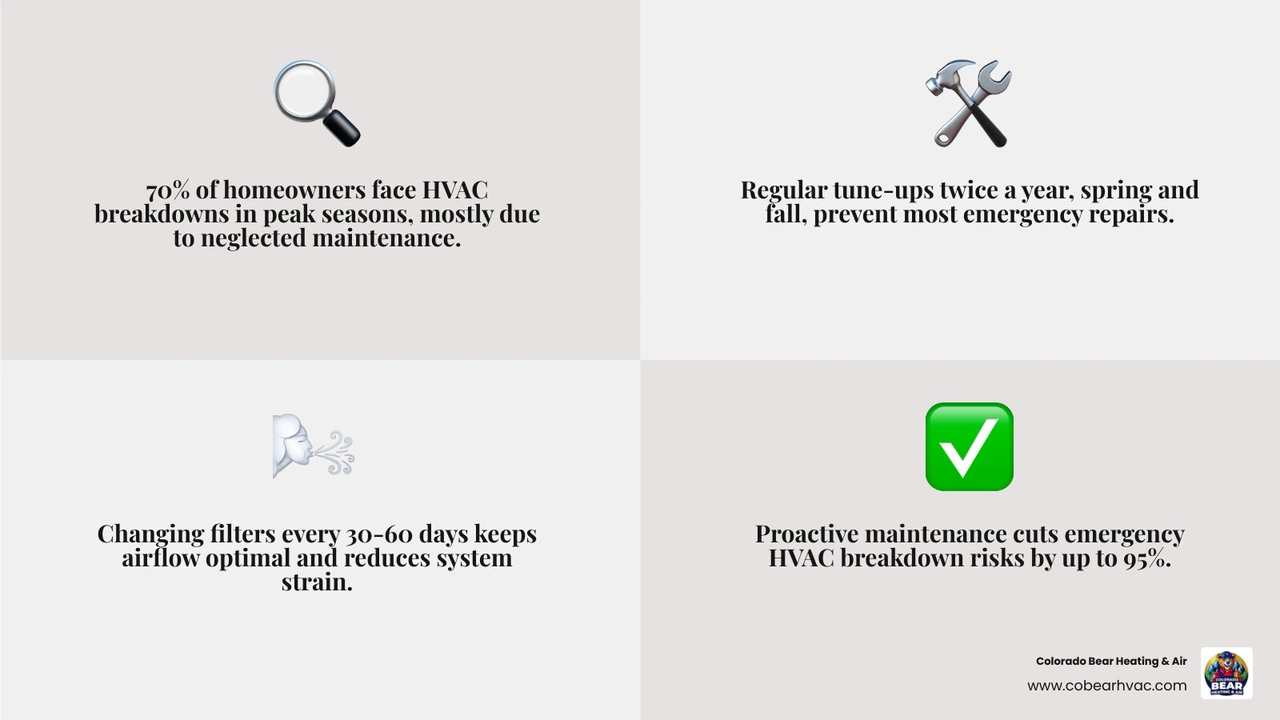
Your HVAC system works quietly in the background every day - until it doesn't. Research shows that 70% of homeowners experience an HVAC breakdown during peak seasons, and almost all of those failures share one thing in common: they were preventable. A poorly maintained system doesn't just fail once - small issues compound over time until the whole thing grinds to a halt, usually on the hottest day in July or the coldest night in January. For homeowners across Castle Rock, Littleton, and the Denver Metro area, that kind of breakdown isn't just uncomfortable - it can be stressful and even dangerous.
The good news is that regular maintenance can cut the risk of an unexpected HVAC breakdown by up to 95%. That means proactive care isn't just a nice-to-have - it's the single most effective thing you can do to protect your home's comfort system year-round.
This guide walks you through everything you need to know, from the most common causes of system failures to the DIY habits and professional inspections that keep your equipment running reliably for 15 to 20 years.
Common Causes of HVAC System Failures
Understanding why systems fail is the first step in learning how to prevent HVAC emergencies with maintenance. In our experience serving the Denver Metro area, most emergency calls aren't caused by a "bad" machine, but by a neglected one.

- Airflow Restriction: This is the "silent killer" of HVAC systems. When air filters are clogged with dust and pet dander, the blower motor has to work twice as hard to pull air through. This leads to overheating and eventual motor failure.
- Dirty Evaporator Coils: If dust gets past your filter, it settles on the wet evaporator coils. This creates a layer of "mud" that prevents heat exchange, often leading to your indoor coils freezing solid-even in the middle of a hot Colorado summer.
- Refrigerant Leaks: Low refrigerant levels put immense strain on the compressor. If left unaddressed, a small leak can lead to a total compressor burnout, which is one of the most significant repairs a homeowner can face.
- Electrical Component Wear: Capacitors and contactors are the heart of your system's electrical start-up. Over time, heat and vibration cause these parts to weaken. A technician can often spot a bulging capacitor during a tune-up before it fails and leaves you without cooling.
- Clogged Condensate Drains: As your AC removes humidity, water collects in a drain pan. If the drain line clogs with algae or debris, that water backs up. Modern systems will shut down to prevent a flood, while older ones might leak through your ceiling.
For a deeper dive into what keeps a system healthy, check out our HVAC Services and Maintenance Guide.
How to Prevent HVAC Emergencies with Maintenance Through Regular Tune-Ups
There is a massive difference between being proactive and being reactive. Homeowners who schedule regular maintenance are 50% less likely to face an emergency breakdown compared to those who wait for things to break.
| Feature | Preventive Maintenance | Reactive (Emergency) Repair |
|---|---|---|
| Breakdown Risk | Very Low (approx. 5%) | Very High (up to 95%) |
| Energy Efficiency | Optimized (Peak Efficiency) | Declining (High Usage) |
| Lifespan | 15-20 Years | 8-10 Years |
| Stress Level | Low - Scheduled at your convenience | High - Usually happens during heatwaves |
| Warranty | Remains Valid | Often Voided due to neglect |
Seasonal inspections act as a "wellness check" for your home. In the spring, we focus on prepping your AC for the high-altitude sun. In the fall, we ensure your furnace is safe and efficient for those freezing Front Range nights. You can learn more about these advantages in our guide on AC Maintenance Key Benefits and discover Essential Furnace Maintenance Tips for a Cozy Winter.
Professional Inspection Checkpoints
When we visit your home in Castle Rock or Centennial, we don't just "look" at the unit. A professional tune-up involves technical steps that homeowners simply can't do themselves. We calibrate thermostats to ensure they are reading the actual temperature of the room, tighten every electrical connection to prevent sparks or shorts, and lubricate moving parts to reduce friction.
We also focus on cleaning the condenser fins. These thin metal slats on your outdoor unit can get bent or clogged with cottonwood seeds, which are notorious in Colorado. Straightening and cleaning them ensures your system can "breathe" and release heat effectively. For more details on what we cover, see our Preventive AC Maintenance Tips.
Essential Homeowner Habits for System Reliability
While we handle the technical heavy lifting, your day-to-day habits play a huge role in how to prevent HVAC emergencies with maintenance.
Think of your HVAC system like a car; you wouldn't drive 50,000 miles without an oil change. Similarly, your HVAC needs routine attention. This includes clearing vents of furniture or rugs and monitoring your energy usage-a sudden spike often means a component is failing and drawing too much power.
Simple Steps for How to Prevent HVAC Emergencies with Maintenance
- Change Air Filters Every 30-60 Days: In Colorado, we deal with high pollen in the spring and wildfire smoke or dust in the summer. Don't wait 90 days. If you have pets, check them every 30 days.
- Maintain 2-Foot Clearance: Keep shrubs, weeds, and patio furniture at least two feet away from your outdoor unit. It needs a massive amount of "fresh" air to dump the heat from your home.
- Flush Condensate Lines: Pouring a cup of distilled vinegar down your drain line every few months can prevent algae buildup that leads to clogs and water damage.
Consistency is the secret to a long-lasting system. You can read more about how Consistent AC Maintenance Extend Lifespan to see the long-term benefits of these simple habits.
Recognizing Warning Signs Before Disaster Strikes
Most systems will "talk" to you before they quit. If you listen closely, you can catch a problem while it’s a small repair rather than a midnight emergency.
- Strange Noises: Grinding, squealing, or loud banging are never normal. A squeal often points to a failing belt or motor bearing, while banging could mean a loose part is rattling around.
- Weak Airflow: If you feel very little air coming out of the vents, your blower motor might be failing, or your evaporator coils might be frozen.
- Short Cycling: If the system turns on and off every few minutes, it's likely overheating or has a faulty sensor. This puts extreme wear on the compressor.
- Unusual Odors: A burning smell could indicate electrical issues, while a "musty" smell usually points to biological growth in the ductwork or drain pan.
If you notice any of these, it's time to act. Review our guide on When to Schedule Emergency HVAC Repairs to help you decide when to call us.
Smart Tools for How to Prevent HVAC Emergencies with Maintenance
By May 2026, technology has made it easier than ever to avoid disasters. Smart thermostats are now capable of AI-driven diagnostics. If your system starts taking 20% longer to cool your home than it did last week, the thermostat can send an alert to your phone. These real-time performance alerts allow us to see "hidden" problems like a slow refrigerant leak or a failing capacitor before the system actually stops working.
Long-Term Benefits of Proactive Care
Beyond just avoiding emergencies, maintenance is a performance win. A well-maintained system runs 15-20% more efficiently, which translates directly to reduced energy consumption.
Furthermore, most manufacturers require proof of annual maintenance to honor your warranty. If a major part fails but you haven't had a professional tune-up in years, the manufacturer may deny your claim. In the Denver Metro area, the Average Lifespan of an HVAC System in Colorado is usually 10-15 years, but with diligent care, we see many systems push past the 20-year mark.
Extending Equipment Longevity
Reducing the strain on your components is the key to durability. When your coils are clean and your filters are fresh, the system doesn't have to run as long to reach your desired temperature. This means fewer "cycles" and less wear on the motor. If you're wondering about the state of your current unit, our guide on When to Repair vs Replace Your HVAC System can provide some clarity.
Frequently Asked Questions about HVAC Maintenance
What are the signs of an impending HVAC emergency?
Beyond the noises and smells mentioned above, keep an eye on your outdoor unit. If you see ice forming on the copper lines in the middle of summer, shut the system off immediately and call us. This usually means there's a serious airflow issue or a refrigerant leak. Running a frozen system can destroy the compressor, turning a simple fix into a total replacement.
How often should I change my air filters in Colorado?
While the packaging might say every 90 days, the Colorado climate is different. Between the dry, dusty air and the heavy pollen seasons in areas like Parker and Castle Rock, we recommend every 30 to 60 days. If you use high-efficiency MERV 11 or 12 filters to trap allergens and pet dander, they tend to clog faster because they are catching more particles—so check them monthly!
Can smart thermostats really prevent system failures?
Yes! Modern smart thermostats monitor "run time" patterns. If your furnace is cycling more frequently than normal to maintain the same heat, it can notify you of a potential issue with the flame sensor or airflow. This early warning prevents "compressor burnout" or total heater failure during a blizzard.
Conclusion
At Colorado Bear Heating & Air, we believe that your home should be your sanctuary, not a source of stress. With over 20 years of experience serving Castle Rock, Denver, Littleton, Highlands Ranch, and Centennial, we've seen how much a little prevention can benefit a family. Our customer-first approach means we provide honest, transparent service to keep your air clean and your home comfortable.
Don't wait for a heatwave or a cold snap to find out your system is struggling. Take the first step in how to prevent HVAC emergencies with maintenance by reaching out to us today.
Request your heating repair service today for fast, reliable comfort service.