What to Do When Your Heat Goes Out: Heating Emergency Safety Steps
Knowing how to stay safe during a heating emergency could be the difference between a stressful night and a genuinely dangerous situation — especially during a Colorado winter when temperatures can plunge well below freezing within hours.
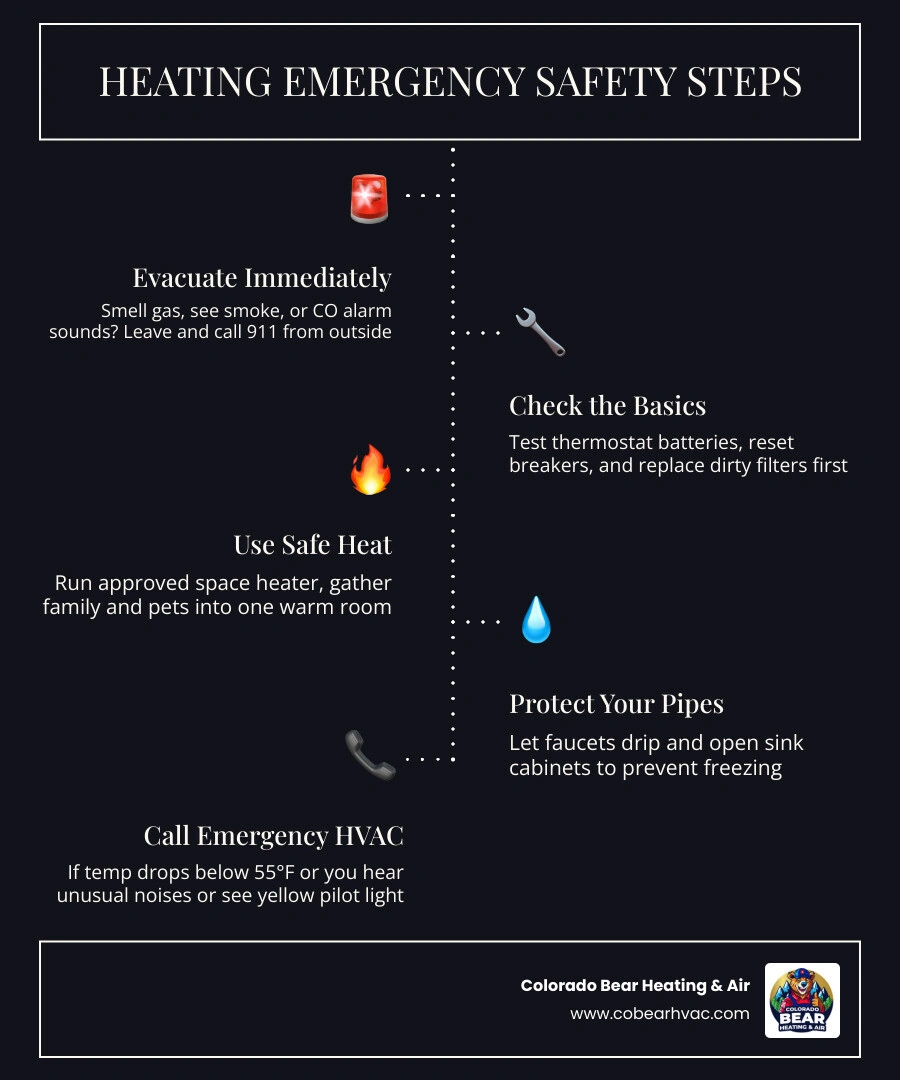
Here are the 5 key steps to stay safe right now:
- Get out immediately if you smell gas, see smoke, or your CO alarm sounds — call 911 from outside
- Check the basics — thermostat batteries, circuit breaker, and air filter before calling a pro
- Use a safe, approved space heater and gather your family (and pets) into one warm room
- Protect your pipes — let faucets drip slowly and open cabinet doors under sinks
- Call emergency HVAC service if your home is dropping below 55°F, you hear unusual noises, or you see a yellow pilot light
Heating equipment is the second leading cause of home fires in the United States, and about 230 people die every year from carbon monoxide poisoning linked to fuel-burning appliances like furnaces and space heaters. In Colorado, where winter storms can knock out your heat overnight, that risk is very real.
The good news? A few simple, practiced steps can protect your family, your home, and your plumbing until help arrives.
Step 1: Recognize Immediate Hazards and Evacuate Safely
When a heating system malfunctions, the immediate instinct is often to try and fix it or huddle closer to inspect the unit. However, safety must always come first. Certain heating emergencies present immediate, life-threatening hazards like gas leaks, carbon monoxide (CO) exposure, or electrical fires.
Recognizing these hazards instantly tells you whether you can stay inside to troubleshoot or if you must evacuate immediately.
How to Stay Safe During a Heating Emergency Involving Gas or Carbon Monoxide
Natural gas is naturally odorless, but utility providers add a chemical called mercaptan to give it a distinct, unmistakable "rotten egg" smell. If you smell this inside your home, do not search for the source of the leak, do not light matches, and do not flip any electrical switches—even turning a light switch on or off can create a tiny spark capable of igniting pooled gas. Gather your family and pets, leave the house immediately, and call 911 or your gas utility provider from a safe distance outside.
Carbon monoxide is even trickier because it is completely colorless, odorless, and tasteless. It often leaks from cracked heat exchangers in older furnaces or blocked exhaust vents. According to the Consumer Product Safety Commission (CPSC), about 230 people die each year from CO poisoning related to fuel-burning household appliances.
Watch out for these common physical symptoms of carbon monoxide poisoning in your household:
- Dull headaches
- Dizziness or lightheadedness
- Nausea or vomiting
- Confusion and shortness of breath
- Unexplained sleepiness or weakness
If your CO detector alarms sound or anyone in your household displays these symptoms, treat it as a critical emergency. Evacuate the premises immediately into the fresh air.
If you live in the southern Denver metro area, having a plan is essential. For localized safety advice, check out our Emergency Heating Repair Castle Rock Tips and review our complete guide on Heating Emergency Castle Rock Tips to keep your household protected.
Step 2: Perform Safe Pre-Service Checks Before Calling a Pro
If there are no signs of gas, smoke, or carbon monoxide, your heating failure might be caused by a simple, non-hazardous issue. Before you pick up the phone to call for an emergency dispatch, there are a few basic, safe troubleshooting checks you can perform yourself. These quick checks can save you time and restore your comfort immediately.
Basic Heating System Checks to Try Safely
Often, what seems like a catastrophic furnace failure is actually a minor communication or power issue. Walk through these steps systematically:
- Check the Thermostat: Ensure your thermostat is set to "Heat" and the target temperature is set at least 5 degrees above the current room temperature. If the screen is blank or flashing a low-battery icon, replace the batteries immediately.
- Inspect the Furnace Power Switch: Furnaces have a power switch nearby that looks exactly like a standard household light switch. It is incredibly common for someone to accidentally flip this switch off while retrieving items from a closet, basement, or utility room. Make sure it is flipped to the "On" position.
- Examine the Circuit Breaker: Locate your home's electrical panel. Look for the circuit breaker labeled for your heating system. If it has tripped to the middle position, flip it completely to "Off" and then back to "On." Safety note: If the breaker immediately trips again, do not attempt to reset it a second time. This indicates an electrical fault that requires a professional inspection.
- Check the Air Filter: A heavily clogged, dirty air filter restricts airflow so severely that the furnace will overheat. When this happens, a safety limit switch automatically shuts the entire system down to prevent a fire. Replace your filter if it looks gray or choked with dust, then see if the system resets.
If your system shut down unexpectedly, walked through these checks, and still have no heat, read our detailed guide on What to Do When Your HVAC Breaks Down Unexpectedly to determine your next steps safely.
Step 3: How to Stay Safe During a Heating Emergency with Temporary Warmth
If your system requires professional repair and you are waiting for a technician to arrive, your main priority shifts to keeping your family warm and safe. In Colorado's sub-zero winter temperatures, indoor spaces can cool down rapidly.
Using safe, temporary heating methods will prevent hypothermia and keep everyone comfortable.
Safe Alternative Heating Methods and Practices
When using alternative heat sources, fire prevention must be your top priority. The CPSC estimates that portable electric space heaters are involved in an average of 1,600 home fires per year, resulting in roughly 70 deaths annually.
To stay warm without risking a fire, follow these strict safety protocols:
- The 3-Foot Rule: Keep all space heaters, wood stoves, and alternative heat sources at least three feet away from anything that can burn, including blankets, curtains, furniture, paper, and pets.
- Plug Directly into the Wall: Never plug a high-draw electric space heater into an extension cord or power strip. These devices can easily overheat, melt, and cause electrical fires. Always plug them directly into a wall outlet.
- Never Leave Heaters Unattended: Turn off and unplug all portable heaters before you go to sleep or leave the room.
- Conserve Existing Heat: Choose one small, well-insulated room (ideally on the south or sunny side of your home) to gather everyone in. Close the doors to unused rooms, hang heavy blankets or towels over windows to block drafts, and wear multiple layers of loose, warm clothing.
- Fireplace and Wood Stove Safety: If you are using a fireplace, ensure the flue is fully open before lighting a fire, and always use a sturdy metal or tempered glass screen to catch flying sparks. Dispose of ashes only after they have cooled completely, placing them in a metal container kept outside, away from the house.
For residents in Littleton or Ken Caryl, we have compiled local winter survival strategies. Take a look at our Emergency Heating Repair Littleton Guide and our Emergency Heating Repair in Ken Caryl Co to learn more about localized cold-weather safety.
Step 4: Protect Your Home’s Plumbing from Freezing
A heating emergency doesn't just threaten your physical comfort; it also threatens the structural integrity of your home. When indoor temperatures drop below 50°F, the water inside your plumbing pipes can quickly freeze. As water freezes, it expands with immense force, splitting copper, PEX, or PVC pipes wide open.
When those pipes thaw, it can cause catastrophic water damage that requires expensive, invasive restoration work.
Preventing Pipe Damage During a Cold Snap
Protecting your plumbing during a heating failure is simple if you act quickly. Take these preventative measures as soon as your heating system goes offline during a cold snap:
- Let the Faucets Drip: Turn on both hot and cold faucets located on exterior walls to a very slow, steady drip. Moving water is much harder to freeze, and keeping the faucet open relieves the extreme pressure buildup inside the pipe if ice does begin to form.
- Open Cabinet Doors: Open the cabinet doors beneath your kitchen and bathroom sinks. This allows whatever ambient warmth is left in your living spaces to circulate around the plumbing pipes.
- Insulate Exposed Pipes: If you have exposed water lines in unheated areas like basements, crawlspaces, or attics, wrap them in foam pipe insulation, heavy towels, or even layers of newspaper secured with duct tape.
- Locate Your Main Water Shutoff: Make sure you know exactly where your main water shutoff valve is located (usually in the basement, near the water meter, or in a utility closet). If a pipe does burst, shutting this valve off immediately will prevent hundreds of gallons of water from flooding your home.
If you are a homeowner in Lone Tree, you can find specific regional tips for safeguarding your property during a deep freeze in our Emergency Heating Lone Tree Repair Guide.
Step 5: Know When to Call for Emergency HVAC Service
Not every heating issue requires a midnight emergency service call. If the outdoor temperature is a mild 55°F and your home is holding steady at a comfortable level, you can likely schedule a standard repair for the following morning.
However, when temperatures are freezing or you notice specific system red flags, waiting is not an option. You need to know how to distinguish between a routine repair and a true heating emergency.
| System Symptom | Urgency Level | Immediate Action Required |
|---|---|---|
| Rotten egg smell or gas odor | CRITICAL EMERGENCY | Evacuate immediately, call 911/gas company from outside. |
| Yellow pilot light (on gas furnaces) | HIGH EMERGENCY | Shut off gas supply if safe, evacuate, and call for emergency HVAC service. |
| Indoor temperature below 55°F in freezing weather | HIGH EMERGENCY | Protect pipes, gather in one room, and call for immediate emergency repair. |
| Loud banging, screeching, or metal-on-metal noises | MODERATE TO HIGH | Turn off system immediately to prevent motor destruction and call for service. |
| Rapid short cycling (turning on and off every few minutes) | ROUTINE TO MODERATE | Turn off system if overheating is suspected; schedule prompt professional repair. |
| Slightly uneven heating or cold spots in some rooms | ROUTINE | Check air filters and register vents; schedule a standard heating tune-up. |
How to Stay Safe During a Heating Emergency by Recognizing True HVAC Red Flags
A yellow pilot light on a natural gas furnace is one of the most critical warning signs. A healthy, properly burning pilot flame should always be a crisp, steady blue. A yellow or flickering flame indicates incomplete combustion, meaning your furnace is actively producing carbon monoxide instead of cleanly venting it away.
Other major red flags include loud, unusual noises coming from the furnace cabinet. Screeching, grinding, or loud metal-on-metal banging usually means a blower wheel has come loose or a motor bearing is failing. Running the system under these conditions can destroy the entire unit or cause an electrical fire.
When you experience these red flags, or if you have vulnerable family members like infants or seniors in your home during a cold snap, you need immediate professional help.
For quick assistance in our primary service areas, read our When to Schedule Emergency HVAC Repairs guide. If you live in Highlands Ranch, keep our 24 Hour Heating Repair Highlands Ranch Co Guide handy, or consult the Heating Emergency Services Highlands Ranch Guide to get a certified technician to your door quickly.
Frequently Asked Questions About Heating Emergencies
Can I use my gas oven to heat my home during an outage?
Absolutely not. You should never, under any circumstances, use a gas oven, cooktop, or outdoor charcoal grill to heat your home. Doing so creates an extreme risk of carbon monoxide poisoning and is a major fire hazard. Gas ovens are not designed for continuous space heating and can quickly fill your home with silent, deadly CO gas.
What temperature should I keep my home to prevent pipes from freezing?
To keep your plumbing safe during a cold snap, you should keep your thermostat set to a minimum of 55°F (13°C). Even if you are traveling or away from home, never turn your heating system completely off during the winter months. If your heating system has failed entirely, let your faucets drip and open cabinet doors to keep ambient air moving around your pipes.
How often should I test my carbon monoxide detectors?
You should test your carbon monoxide detectors at least once a month by pressing the "Test" button on the unit. Replace the batteries at least once a year (unless you have a unit with a 10-year sealed lithium battery). Additionally, keep in mind that CO detector sensors degrade over time; the entire unit should be replaced every 5 to 7 years, depending on the manufacturer's recommendations.
Conclusion
A home heating emergency can be incredibly stressful, but staying calm and taking structured, safety-first steps will protect your family and your property from harm. Remember to prioritize immediate evacuation if you suspect gas or carbon monoxide, perform basic pre-service checks safely, utilize safe temporary heating methods, and protect your pipes from freezing.
At Colorado Bear Heating & Air, we bring over 20 years of local experience, honesty, and a customer-first approach to every single call. We proudly serve homeowners across Castle Rock, Denver, Elizabeth, Larkspur, Castle Pines, Parker, Sedalia, Aurora, Littleton, Highlands Ranch, Lone Tree, and Centennial. When winter weather strikes and your comfort is on the line, we are here to provide fast, reliable, and transparent service.
Don't stay in the cold. Contact us today or visit our Colorado Bear Heating & Air Heating Repair page to schedule your service and get your home back to safe, cozy temperatures.