Immediate Steps for What to Do When Your HVAC Breaks Down Unexpectedly
What to do when your HVAC breaks down unexpectedly is something every Colorado homeowner should know — because when temperatures swing to extremes along the Front Range, a failed heating or cooling system stops being a minor inconvenience and becomes a genuine safety concern.
Here's a quick overview of the most important steps to take right now:
- Stay calm and assess - Note any unusual sounds, smells, or visible issues before touching anything.
- Check your thermostat - Confirm it's set to the right mode and temperature, and replace the batteries if needed.
- Inspect your circuit breaker - Look for a tripped breaker and reset it once (only once).
- Check your air filter - A clogged filter can cause your system to shut down entirely.
- Look at the outdoor unit - Clear any debris blocking airflow around the unit.
- Turn the system off - If you smell burning, see ice buildup, or hear loud noises, shut it down immediately.
- Call a licensed HVAC technician - If basic checks don't resolve the issue, it's time for professional help.
Whether it's a sweltering summer afternoon in Castle Rock or a frigid winter night in Highlands Ranch, knowing these steps can protect your family and prevent further damage to your system.
HVAC systems are built to last — most run reliably for 12 to 15 years with proper care — but even well-maintained units can fail without warning. A tripped breaker, a frozen coil, or a failing capacitor can bring your whole system to a halt at the worst possible moment. The good news is that many of the most common causes of sudden HVAC failure are things you can quickly check yourself before picking up the phone.
This guide walks you through everything you need to know: what to check first, when to call for emergency service, how to stay safe while you wait, and how to decide whether a repair or a full replacement makes more sense for your home.
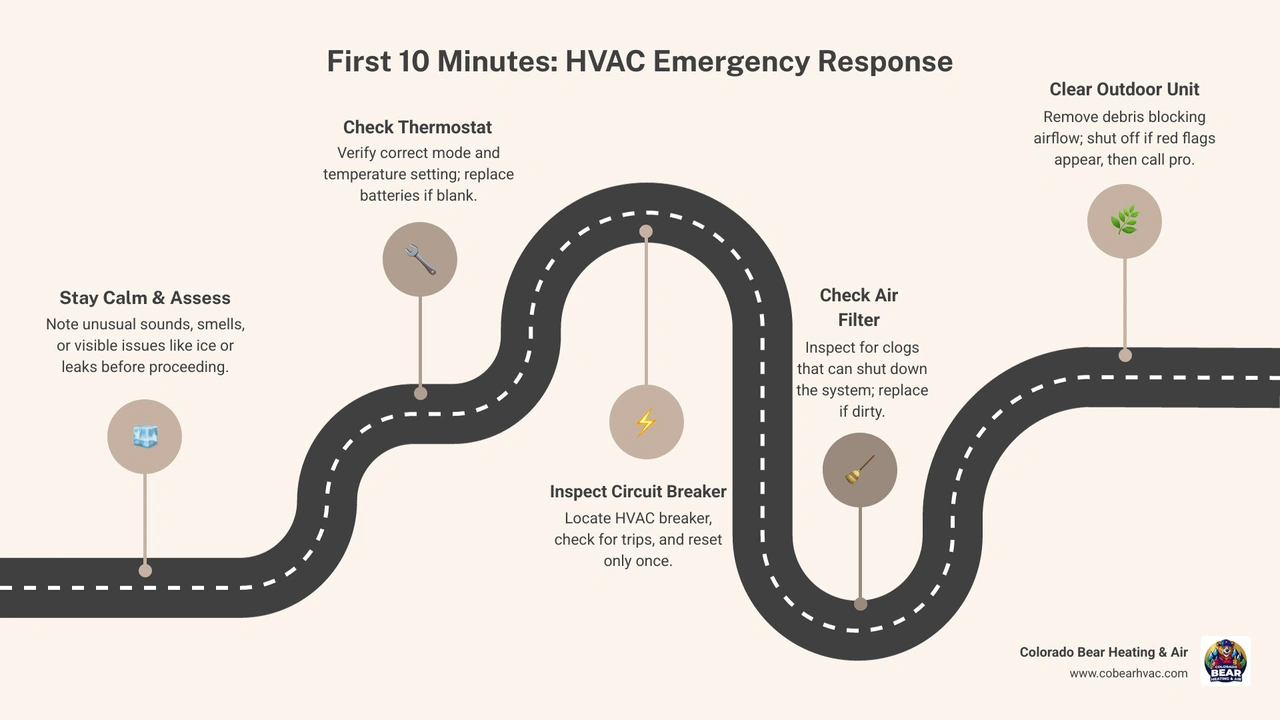

When the air in your home stops circulating, the first ten minutes are critical. It is easy to panic, especially if it is April 2026 and a sudden spring blizzard is rolling through Monument or Larkspur. However, a systematic approach can often save you from a needless emergency call.
Start by checking your thermostat. It sounds simple, but sometimes a family member may have adjusted the settings, or a power flicker could have reset the unit to "Auto" instead of "Heat" or "Cool." If the screen is blank, the batteries might simply be dead.
Next, look at your power supply. Head to your electrical panel and locate the breaker labeled for your HVAC system. If it has tripped to the "off" or middle position, flip it all the way to off and then back to on. Important: If it trips again immediately, do not try to reset it a second time. This indicates a serious electrical fault that requires professional attention. You can find more details on how to respond when furnace won't turn on to help narrow down the cause.
Airflow is another common culprit. A heavily clogged air filter acts like a wall, forcing the blower motor to overheat and shut down. If your filter looks like a lint trap, replace it immediately. Finally, step outside. Your outdoor condenser unit needs at least two feet of clearance on all sides to breathe. If weeds, snow, or debris have hemmed it in, the system will struggle and eventually fail.
While you perform these checks, document what you see. Is the unit making a screeching sound? Do you smell something like burning plastic? Having these notes ready will help us diagnose the problem much faster when we arrive.
Troubleshooting What to Do When Your HVAC Breaks Down Unexpectedly
If the basics don't work, dive a little deeper into these homeowner-safe troubleshooting steps:
- Battery Replacement: Even if the screen is visible, weak batteries can prevent the thermostat from sending a signal to the furnace or AC.
- Mode Verification: Ensure the thermostat is set to the correct mode. In Colorado, we often switch between heating and cooling in the same day.
- Disconnect Switches: Most outdoor units have a "shut-off" box nearby. Ensure the handle hasn't been pulled or the switch flipped.
- Airflow Obstructions: Check your registers and vents inside the house. If too many are closed or blocked by furniture, the backpressure can cause the system to cycle off.
Understanding HVAC service and what professionals provide can give you peace of mind that once these DIY steps are exhausted, we have the specialized tools to take it from there.
Recognizing Warning Signs and Emergency Scenarios
Rarely does an HVAC system fail without sending a few "warning shots" first. Recognizing these signs can help you address common HVAC repair issues with expert solutions before the system dies completely.
One of the most visual red flags is ice buildup. If you see frost or ice on the copper refrigerant lines or the outdoor coil — even in the middle of a hot July day — shut the system off immediately. This is usually caused by a refrigerant leak or a severe airflow restriction. Running a frozen system can destroy the compressor, which is one of the most expensive parts to replace. If you are in a specific situation like my outdoor heat pump is frozen in Sedalia, CO, you need a technician who knows how to handle Colorado's unique climate.
Other warning signs include:
- Unusual Noises: Grinding, banging, or screeching sounds often mean a mechanical part like a fan belt or motor bearing is failing.
- Burning Smells: An electrical odor or the smell of burning dust that doesn't go away could indicate overheating wires.
- Weak Airflow: If the air coming out of your vents feels like a faint whisper, your blower motor or ductwork may be compromised.
- Frequent Cycling: If your unit turns on and off every few minutes (short-cycling), it is under immense stress.
When to Call for Professional Emergency Service
Not every breakdown is an emergency, but many are. You should call for immediate help if:
- Extreme Temperatures: If it is below 32°F or above 90°F outside, your home's internal temperature can reach unsafe levels in just a few hours.
- Vulnerable Residents: Homes with infants, elderly family members, or those with chronic health conditions cannot wait 24 to 48 hours for a standard appointment.
- Gas Leaks: If you smell "rotten eggs," evacuate the home immediately and call your gas provider and an HVAC professional.
- Electrical Hazards: If your system is sparking or repeatedly tripping the breaker, it is a fire risk.
Knowing when to schedule emergency HVAC repairs is vital for safety. For those in our local service area, we offer emergency heating repair Castle Rock tips to help you navigate these high-stress moments.
Staying Safe and Comfortable While Waiting for Repairs
Once you've called us for service, your priority shifts to "survival mode." Depending on the season, your strategy will change.
In the Summer:
- Stay Hydrated: Drink plenty of water and avoid caffeine, which can dehydrate you.
- Window Management: Close all blinds and curtains on the sunny side of the house to block out radiant heat.
- Low Ground: Heat rises. If you have a basement, move your activities there, as it will stay significantly cooler.
- Cross-Ventilation: If the temperature outside drops below the indoor temperature at night, open windows on opposite sides of the house to create a breeze.
In the Winter:
- Thermal Layers: Wear wool socks, hats, and layers of clothing.
- Concentrate Heat: Pick one room to "live" in and close the doors to the rest of the house to trap residual warmth.
- Warm Liquids: Drinking tea or broth can help maintain your core body temperature.
For residents in specific neighborhoods, our heating emergency services Highlands Ranch guide and emergency heating repair Littleton guide offer localized advice for staying safe during a Front Range outage.
Safety Protocols for What to Do When Your HVAC Breaks Down Unexpectedly
Safety is paramount when the system is down. If your furnace fails during a deep freeze in Aurora, you must protect your plumbing. Open the cabinet doors under your kitchen and bathroom sinks to allow room air to reach the pipes, and leave your faucets at a very slow drip to prevent them from freezing and bursting. Check our 24/7 heating repair Aurora tips for more on pipe protection.
If you are using space heaters, keep them at least three feet away from curtains, furniture, or bedding, and never leave them unattended. If you are dealing with a heat pump issue, refer to our heat pump emergency Castle Rock guide for system-specific safety steps.
Most importantly, monitor your family for signs of heatstroke or hypothermia. A body temperature above 103°F is a medical emergency. If indoor temperatures exceed 85°F, it is often safer to relocate vulnerable individuals to a library, mall, or a friend’s house until the repair is complete.
Repair vs. Replacement: Making the Right Choice in 2026
When we arrive and diagnose the problem, you may face a tough decision: should you fix the old unit or invest in a new one? In 2026, modern HVAC technology is more efficient than ever, but a repair might still be the logical choice for a younger system.
| Factor | Consider Repair If... | Consider Replacement If... |
|---|---|---|
| System Age | The unit is under 10 years old. | The unit is over 12–15 years old. |
| Repair Extent | It is a minor fix (capacitor, cleaning). | The repair is extensive compared to a new system. |
| Efficiency | Your energy bills are stable. | You want to upgrade to a higher SEER rating. |
| Frequency | This is the first major issue. | The unit breaks down every season. |
A helpful guideline is to consider the age of your unit alongside the frequency and severity of repairs. If the system is nearing the end of its expected lifespan and requires a major component replacement, investing in a new, high-efficiency model often provides better long-term value. routine HVAC repair saves money long-term, but eventually, every machine reaches the end of its road.
Newer units often have SEER ratings of 14–20+, compared to older models that might only be 8–10. This jump in efficiency can significantly lower your monthly utility bills in Centennial or Highlands Ranch. If you are weighing these options, our 24-hour heating repair Highlands Ranch CO guide can help you understand the long-term benefits of modern equipment.
Frequently Asked Questions about What to Do When Your HVAC Breaks Down Unexpectedly
What information should I provide to an HVAC technician when calling for emergency service?
To help us get to your home in Parker or Elizabeth fully prepared, please have the following information ready:
- Onset Time: When did you first notice the problem?
- Specific Symptoms: Is it blowing warm air, making a loud rattling noise, or not turning on at all? If your heater is blowing cold air in Aurora, that is a specific symptom we need to know.
- Error Codes: If your thermostat or the unit itself is displaying a flashing light or a code (like "E1"), write it down.
- Attempted Troubleshooting: Let us know if you already checked the breaker or changed the filter. This prevents us from repeating steps you've already taken.
How can regular maintenance prevent future HVAC emergencies?
The best "emergency" is the one that never happens. Annual inspections — ideally once in the spring for your AC and once in the fall for your furnace — allow us to catch minor issues like frayed wires or worn bearings before they cause a total shutdown. During these visits, we clean the coils, check refrigerant levels, and ensure all safety sensors are working. We truly believe that routine HVAC repair saves money long-term by extending the lifespan of your equipment and preventing the 2:00 AM emergency call.
When does a breakdown qualify as a medical emergency?
An HVAC breakdown becomes a medical emergency when the indoor environment poses a direct threat to health. If indoor temperatures exceed 85°F, infants and the elderly are at high risk for heat exhaustion. If someone’s body temperature reaches 103°F, they stop sweating, or they become confused, call 911 immediately. In extreme cold, if you cannot keep the indoor temperature above 55°F, there is a risk of hypothermia for vulnerable populations. Always prioritize human safety over the equipment.
Conclusion
At Colorado Bear Heating & Air, we understand that an HVAC failure is more than just a technical problem — it is a disruption to your home’s sanctuary. With over 20 years of experience serving Castle Rock, the Denver Metro Area, and communities from Monument to Aurora, we’ve seen it all. Our customer-first approach means we provide honest, transparent communication and work that is done right the first time.
We are proud to serve our neighbors in:
- Castle Rock, Castle Pines, and Sedalia
- Highlands Ranch, Littleton, and Lone Tree
- Centennial, Parker, and Elizabeth
- Denver, Aurora, and Monument
Don’t spend another minute in discomfort. Our licensed and factory-certified technicians are ready to restore your home’s climate and your peace of mind. Request your emergency heating repair today for fast, reliable service you can trust.