What is an Emergency Service Call and When Should You Request One?
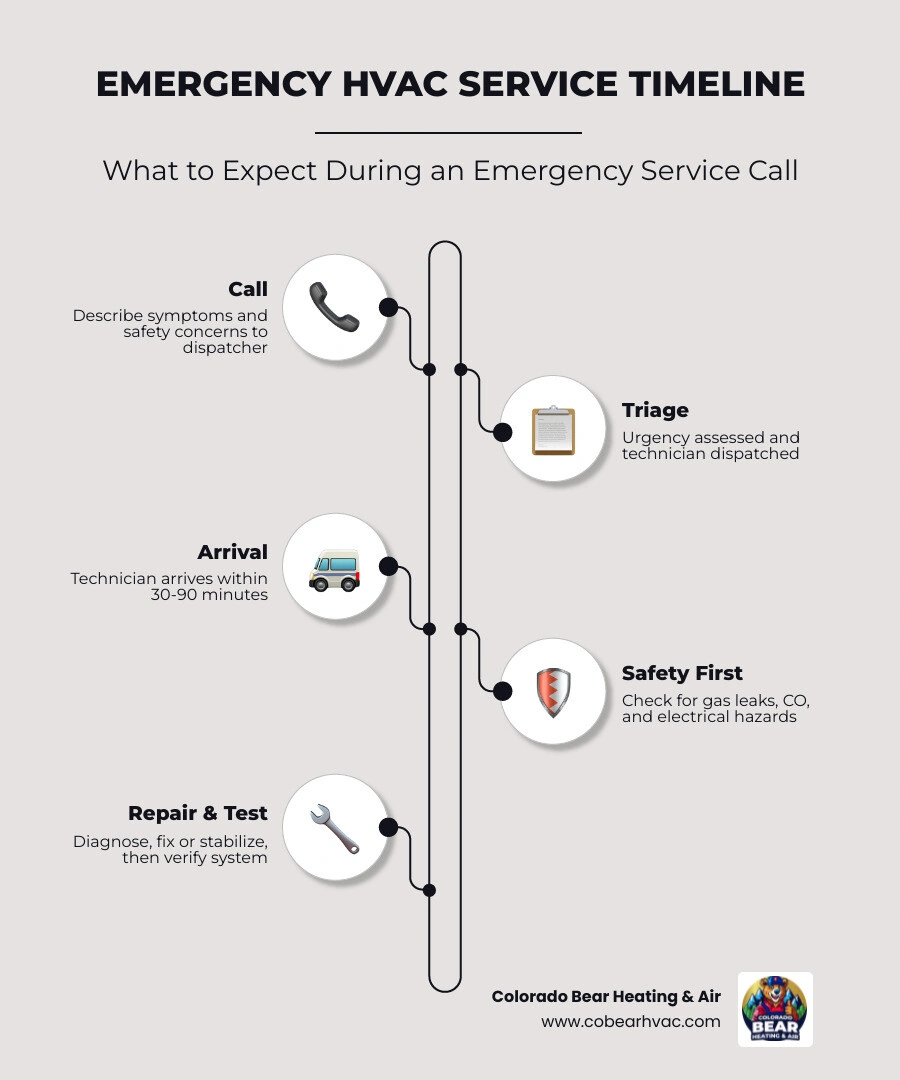
Knowing what to expect during an emergency service call can make a stressful situation far easier to handle — especially when your heating or cooling system fails during a Colorado winter freeze or a summer heat wave. Here is a quick overview of how the process typically unfolds:
- You call for emergency service — describe your symptoms and any safety concerns
- A dispatcher triages your situation — they assess urgency and send a technician
- The technician arrives — typically within 30 to 90 minutes for emergency calls
- A safety inspection comes first — checking for gas leaks, carbon monoxide, and electrical hazards before anything else
- Diagnosis and root cause analysis — the technician identifies what failed and why
- Repair or stabilization — either a permanent fix or a safe temporary solution until parts arrive
- Post-repair testing — the system is verified and tested before the technician leaves
- You receive documentation and next steps — including guidance to prevent future breakdowns
When heat or air conditioning fails during extreme weather, the uncertainty of not knowing what comes next can be just as stressful as the breakdown itself. Over 60% of HVAC emergencies happen during peak seasons — exactly when you need your system the most. And with roughly 40% of those calls tracing back to something as simple as a tripped breaker or a dead thermostat battery, a little advance knowledge goes a long way.
This guide walks you through every stage of the process — from the moment you pick up the phone to the moment your home is comfortable again — so you are never caught off guard.
Learn more about what to expect during an emergency service call:
- how to prevent hvac emergencies with maintenance
- how to stay safe during a heating emergency
- what to do when your hvac breaks down unexpectedly
An emergency service call is an unscheduled, rapid-response visit by a licensed technician to address a critical system failure. Unlike standard appointments scheduled days or weeks in advance, emergency calls are treated with immediate urgency. They are prioritized to protect your family’s health, ensure home safety, and prevent severe property damage.
But how do you know if your heating or cooling issue is a true emergency or if it can wait for a standard appointment?
Generally, an HVAC issue escalates to an emergency if it involves immediate safety hazards, extreme indoor temperatures, or potential structural damage. For example, during a freezing Colorado winter, a complete furnace breakdown is a major hazard because indoor temperatures can plunge rapidly, risking frozen and burst pipes. Similarly, a total air conditioning failure during a severe summer heatwave poses a dangerous threat to vulnerable individuals, such as the elderly, young children, or those with chronic health conditions.
To help you decide whether your system failure requires an immediate response, review our guide on When to Schedule Emergency HVAC Repairs. Taking action early not only keeps your family safe but also prevents minor malfunctions from cascading into catastrophic equipment failures. If your system has stopped working and you are unsure of your next steps, read about What to Do When Your HVAC Breaks Down Unexpectedly to manage the situation safely.
Warning Signs That You Need an Emergency Service Call
Some HVAC problems are subtle, while others make themselves known instantly. Recognizing the warning signs of a critical system failure can help you act before extensive damage occurs.
Here are the most common red flags that require an immediate emergency service call:
- The Smell of Gas or Rotten Eggs: Natural gas is naturally odorless, but utility companies add a chemical called mercaptan to give it a distinctive rotten-egg smell. If you detect this near your furnace, it indicates a critical gas leak.
- Carbon Monoxide (CO) Alarms: Carbon monoxide is a colorless, odorless gas that can leak from a cracked heat exchanger. If your CO detector sounds, treat it as a life-threatening emergency.
- Electrical Sparking or Burning Smells: Smelling burning plastic, seeing smoke, or hearing buzzing or crackling from your system points to severe electrical issues, such as short circuits or overloaded wiring. Over 51,000 home fires annually are attributed to electrical failures, making this a critical hazard.
- Frozen Evaporator Coils: If you see ice forming on your outdoor AC unit or indoor coils during the summer, your system is under extreme strain. Running a frozen system can destroy the compressor, which is one of the most expensive components to replace.
- Loud, Unusual Mechanical Noises: Screeching, metal-on-metal grinding, or loud banging indicates that a vital component, such as the blower wheel or compressor, has failed or is about to break completely.
For detailed safety instructions on handling heating-specific crises, refer to our article on How to Stay Safe During a Heating Emergency.
To help you distinguish between routine maintenance issues and true emergencies, we have put together this comparison table:
| System Symptom | Standard Service (Can Wait for Business Hours) | True Emergency (Call Immediately!) |
|---|---|---|
| Indoor Temperature | Home is slightly uncomfortable but safe (between 65°F and 75°F). | Extreme indoor heat (over 85°F) or cold (below 50°F) risking health or frozen pipes. |
| System Noises | Mild clicking at startup or gentle humming. | Metal-on-metal grinding, loud banging, or continuous electrical buzzing. |
| Odors | Dusty smell when first turning on the heater for the season. | Rotten egg smell (gas leak) or acrid burning plastic odors. |
| System Operation | System cycles slightly longer than usual or has uneven airflow. | Complete system failure, repeated breaker tripping, or visible smoke. |
| AC Evaporator Coil | Reduced cooling performance or dirty air filter. | Solid ice buildup on the coils or refrigerant lines. |
What to Expect During an Emergency Service Call: Step-by-Step
When you contact us for emergency support, we follow a structured, highly coordinated process to restore safety and comfort to your home as quickly as possible. Here is a step-by-step breakdown of how a typical emergency visit unfolds:
1. Initial Contact and Triage
The process begins the moment you call. Our dispatcher will ask detailed questions about the symptoms your system is exhibiting, any safety hazards you have noticed (such as unusual smells or sounds), and the current temperature in your home. This safety screening helps us prioritize the most critical situations first.
2. Dispatch and Rapid Travel
Once your call is triaged, we dispatch a licensed, factory-certified technician. Thanks to our localized routing throughout Castle Rock, Littleton, Highlands Ranch, and the surrounding Denver Metro communities, we strive to get a technician to your door within 30 to 90 minutes.
3. On-Site Safety Inspection and Diagnosis
Before touching any mechanical parts, the technician performs a safety sweep. They check for gas leaks, carbon monoxide levels, and electrical hazards. Once safety is verified, they perform a comprehensive root cause analysis to pinpoint the exact failure point.
4. Stabilization and Repair Plan
Our primary goal is to make your home safe and habitable. The technician will explain their findings in plain, jargon-free language and lay out your options. If the necessary parts are on our service truck, we will complete the permanent repair on the spot. If a specialty part must be ordered, we will safely stabilize the system and help you implement temporary comfort measures until the part arrives.
If you are located in Ken Caryl or Castle Rock, you can find localized tips and response guidelines in our articles on Emergency Heating Repair in Ken Caryl Co and Emergency Heating Repair Castle Rock Tips.
How Homeowners Should Prepare for the Technician's Arrival
While our technician is on the way, you can take several simple steps to ensure the visit goes smoothly, safely, and efficiently. Proper preparation allows us to get straight to work the moment we arrive.
If you live in Lone Tree or Highlands Ranch, our localized guides offer excellent checklists for managing heating breakdowns: Emergency Heating Lone Tree Repair Guide and 24 Hour Heating Repair Highlands Ranch Co Guide.
Preparing Your Home: What to Expect During an Emergency Service Call
To maximize the efficiency of your service call, please follow this quick pre-arrival checklist:
- Clear Access Paths: Ensure there is a clear, unobstructed path to both your indoor unit (furnace, evaporator coil, or air handler) and your outdoor condenser or heat pump. Clear away storage boxes, clutter, snow, or overgrown yard debris.
- Secure Your Pets: Emergency repairs can involve loud noises, open electrical panels, and technicians moving back and forth to their service trucks. Keep your dogs, cats, or other pets safely secured in a separate room to prevent them from slipping outside or getting injured.
- Locate Your Electrical Panel: Know where your main electrical service panel is located. The technician may need to shut off or restore power to specific circuits during diagnostics and repair.
- Perform a Quick Thermostat and Breaker Check: Before we arrive, verify that your thermostat has fresh batteries and is set to the correct mode. Check your electrical panel to see if a breaker has tripped. If it has, reset it once. If it trips again immediately, do not force it—leave it off and let our technician handle it.
- Gather System Documentation: If you have previous service records, warranty certificates, or equipment manuals, keep them handy. This information can help our technicians verify warranty coverage and system history.
For additional tips on preparing your home during a winter breakdown in the Highlands Ranch area, read our Heating Emergency Services Highlands Ranch Guide.
What Happens During the On-Site Visit and Diagnostics
Once our technician arrives at your home, they will introduce themselves, wear protective shoe covers to keep your floors clean, and immediately begin the diagnostic process.
For homeowners in Douglas County, our Heating Emergency Castle Rock Tips provide a great local reference on what to watch for during this initial assessment.
The Diagnostic Process: What to Expect During an Emergency Service Call
A professional diagnostic visit is highly systematic. It is designed to find the true root cause of a failure rather than just treating the symptoms. Here is what our technicians do:
- Electrical Testing: Using a digital multimeter, the technician tests electrical components, checking voltage, amperage, and resistance across capacitors, contactors, and control boards to find short circuits or failing parts.
- Pressure and Refrigerant Checks: For air conditioners and heat pumps, we check system pressures to ensure there are no refrigerant leaks or compressor blockages.
- Airflow and Combustion Analysis: For furnaces, we analyze airflow and perform a combustion analysis to verify that fuel is burning cleanly and safely, ensuring no carbon monoxide is escaping into your living spaces.
- Root Cause Analysis: We look for cascading failures. For example, if a blower motor burned out, we check if a severely clogged air filter was the root cause of the restricted airflow that caused the motor to overheat.
- Stabilization: If a permanent repair cannot be made immediately due to a rare part requirement, we will isolate the faulty components, ensure the system is completely safe, and explain the next steps to restore your home's comfort.
Frequently Asked Questions About Emergency HVAC Repairs
What qualifies as a true heating or cooling emergency?
A true emergency is any situation that threatens your family's safety, health, or property. This includes a complete heating failure during sub-freezing winter weather, a total cooling failure during extreme summer heatwaves, visible smoke or sparks coming from your system, carbon monoxide alarms, or gas leaks near your furnace.
How long does a typical emergency service visit take?
Most emergency repairs are diagnosed and resolved within 1 to 3 hours once the technician is on-site. The exact timeline depends on the complexity of the failure, how easy the equipment is to access, and whether the replacement parts are readily available on our service truck.
What should I do if I smell gas or rotten eggs near my furnace?
If you smell natural gas, prioritize safety first. Evacuate your home immediately. Do not flip any light switches, use your phone, or start your car in the garage, as these actions can create a spark. Call 911 and your local gas utility company from a safe distance outside, then contact us for a professional safety inspection once the area has been cleared by first responders.
Conclusion
Experiencing an unexpected heating or cooling failure can be incredibly stressful, but knowing what to expect during an emergency service call helps you maintain control and stay safe. By recognizing the critical warning signs, preparing your home for our arrival, and understanding the diagnostic process, you can ensure a smooth, efficient repair that restores your comfort without any unwanted surprises.
The absolute best way to avoid the stress of an emergency is to prevent it entirely. Routine seasonal maintenance is highly effective; in fact, homeowners who invest in regular tune-ups are 50% less likely to experience a total system breakdown. To learn how proactive care can protect your home and extend the life of your equipment, check out our guide on How to Prevent HVAC Emergencies with Maintenance.
At Colorado Bear Heating & Air, we bring over 20 years of experience, licensed expertise, and a customer-first approach to homeowners in Castle Rock, Littleton, Highlands Ranch, and across the Denver Metro Area. We are dedicated to providing honest, reliable service to keep your family safe and comfortable all year round.
If your system is struggling or has stopped working entirely, do not wait for the problem to get worse. Schedule your heating repair with Colorado Bear Heating & Air for fast, reliable comfort service you can trust!