Why Summer Energy Bills Hit So Hard on Colorado's Front Range
Summer energy saving tips for Colorado homeowners are more important than most people realize — because cooling costs can eat up nearly half of your summer electric bill. If you live in Castle Rock, Littleton, Highlands Ranch, or anywhere along the Denver Metro corridor, you already know how fast temperatures can climb from a cool morning to a blazing afternoon.
Here are the most effective summer energy saving tips for Colorado homes at a glance:
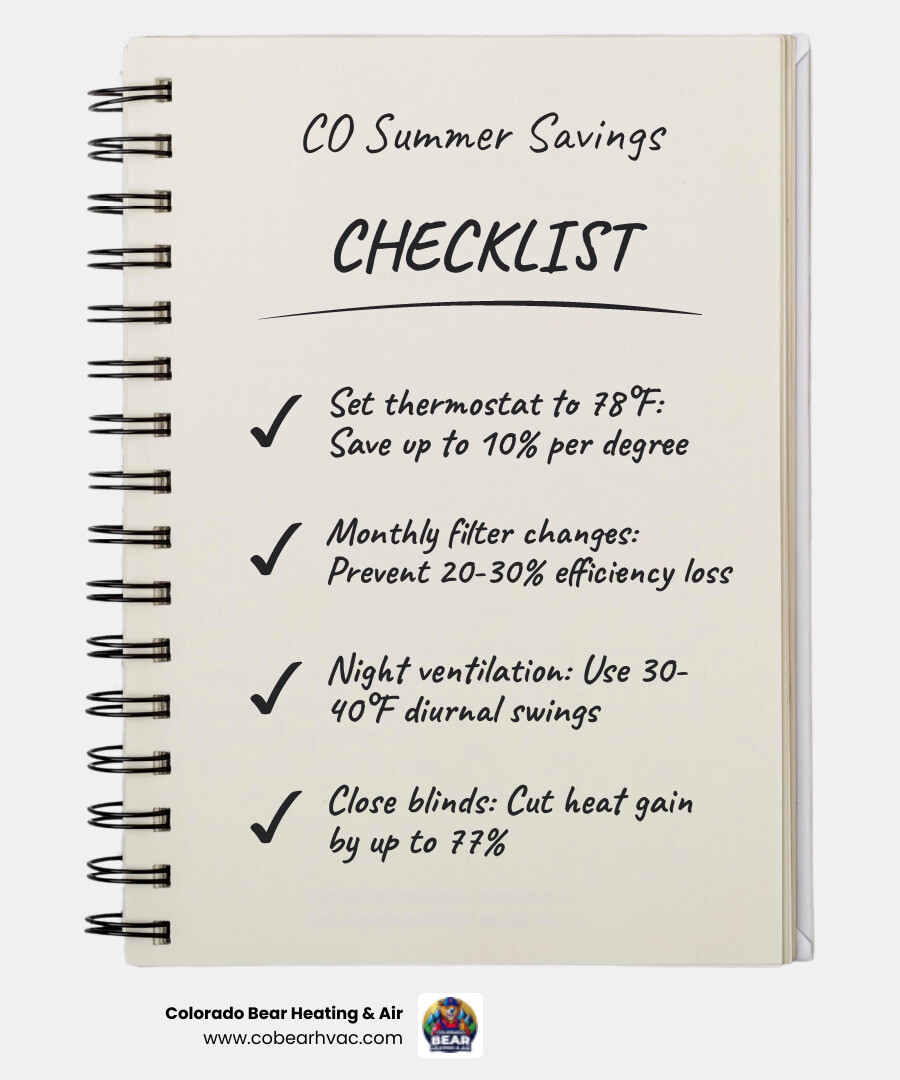
- Set your thermostat to 78°F when you're home, and raise it 7-10°F when you're away for 8+ hours
- Change your AC filter every month during summer — Denver's dry, dusty air clogs filters faster than most climates
- Open windows at night when temps drop to the 50s-60s, then close everything up in the morning to trap the cool air
- Close blinds on south- and west-facing windows during peak sun hours to cut heat gain by up to 77%
- Seal air leaks around doors, windows, and ductwork — leaks can waste 20-30% of your cooled air
- Run ceiling fans counterclockwise in summer to create a wind-chill effect and let you raise the thermostat a few degrees
- Run heat-generating appliances like dryers and ovens in the evening, not during the hottest part of the day
- Schedule an annual AC tune-up before summer — neglected systems lose efficiency every season
- Upgrade attic insulation to R-49 to meet Colorado standards and reduce cooling costs by up to 15%
- Check for utility rebates through Xcel Energy for smart thermostats and insulation upgrades
Colorado's climate is genuinely unique. The high altitude means thinner air, more intense UV, and dramatic swings of 30-40°F between day and night. That combination creates both challenges and real opportunities for smart homeowners. A few targeted changes — some free, some low-cost — can make a meaningful dent in your monthly bills while keeping your home comfortable all summer long.
At Colorado Bear Heating & Air, we've spent 20+ years helping Front Range homeowners get the most out of their cooling systems. This guide covers everything from quick wins you can do today to longer-term upgrades worth considering before the next heat wave rolls in.
Top Summer Energy Saving Tips for Colorado Homes
Living in the April 2026 landscape of Colorado, we are seeing more extreme temperature fluctuations than ever before. Managing your home's energy use isn't just about being "green"—it's about keeping your hard-earned money in your pocket. One of the most impactful summer energy saving tips for Colorado is simply mastering your thermostat. The Department of Energy recommends setting your thermostat to 78°F when you are at home. While that might sound high to some, every degree you raise it can save you significant money on your cooling costs. If you can handle 80°F by using a ceiling fan, your wallet will thank you.
Window management is another "quick win." In cities like Castle Rock and Parker, the sun is incredibly intense due to the elevation. By simply closing your blinds or curtains on the south and west sides of your house during the day, you can reduce solar heat gain by up to 77%. Think of your windows like a greenhouse; once that heat is inside, your AC has to work double-time to get it out.
Don't forget about your internal heat sources. Running a clothes dryer or an oven at 2:00 PM is a recipe for a high electric bill. These appliances dump heat directly into your living space, forcing your air conditioner to fight against them. We recommend doing laundry and heavy cooking in the early morning or late evening when the outdoor air is naturally cooler. Finally, switching to LED lighting is a no-brainer. LEDs use 75% to 80% less energy than old incandescent bulbs and, crucially, they stay cool to the touch, whereas old bulbs act like tiny heaters in every room.
Leveraging the High-Altitude Climate for Natural Cooling
Colorado’s semi-arid climate and high altitude offer a massive advantage: the "diurnal swing." This is the fancy term for the 30-to-40-degree temperature drop we experience once the sun goes down. Even on a day that hits 95°F in Aurora or Littleton, the overnight lows often dip into the 50s or 60s. This is essentially free air conditioning if you know how to use it.
| Feature | Central Air Conditioning | Evaporative (Swamp) Coolers |
|---|---|---|
| Electricity Usage | High (Standard for most homes) | Low (Uses ~75% less electricity) |
| Humidity Impact | Removes humidity (Dries air) | Adds humidity (Great for dry CO air) |
| Effectiveness | Works in all temperatures | Struggles above 90°F or 50% humidity |
| Maintenance | Annual professional tune-ups | Frequent pad changes/winterization |
| Air Quality | Recirculates filtered indoor air | Pulls in fresh (but potentially dusty) outdoor air |
Using Diurnal Temperature Swings for Summer Energy Saving Tips for Colorado
To truly leverage these swings, you need to practice "night ventilation." As soon as the outdoor temperature drops below your indoor temperature (usually around 7:00 PM or 8:00 PM), open your windows to create cross-ventilation. If you have a two-story home in Highlands Ranch, open windows on the lower level and the upper level to create a "chimney effect," allowing hot air to escape out the top while drawing cool air in through the bottom.
The key is to be disciplined. You must close all windows and blinds by 8:00 AM the next morning to "trap" that cool air inside. This strategy can delay the need to turn on your AC until late afternoon, or on milder days, eliminate the need for it entirely. This is one of the most effective summer energy saving tips for Colorado because it costs exactly zero dollars to implement.
Maximizing HVAC Performance and Efficiency
Your air conditioner is a finely tuned machine, and like any machine, it needs the right conditions to run efficiently. One of the biggest mistakes we see is homeowners blocking their vents with furniture or rugs. This creates common AC airflow problems that force the system to work much harder to move air, increasing wear and tear and spiking your bills.
Another pro tip is to shade your outdoor condenser unit. If your AC unit is baking in the direct afternoon sun, it has a harder time dispersing the heat it removed from your home. Planting a tall hedge or installing a lattice (while ensuring at least 2-3 feet of clearance for airflow) can improve efficiency by about 10%. Furthermore, your ductwork is the "veins" of your cooling system. If you have leaks in your ducts, you could be losing 20-30% of your cooled air to your attic or crawlspace. Sealing these leaks is a high-ROI task that pays for itself quickly. For those looking at a new installation, smart thermostat integration with new AC system setups are the gold standard for modern efficiency.
Why Monthly Filter Changes are Critical in the Mile High City
In the Denver Metro area, we deal with a lot of dust, pollen, and construction debris. Because our air is so dry, these particles stay airborne longer. This is why a monthly filter check is non-negotiable. A dirty filter makes your AC work 5% to 15% harder, which can lead to higher monthly utility bills.
Following a proper AC filter replacement guide for homeowners ensures that your system doesn't "suffocate." When airflow is restricted, the cooling coils can actually freeze over, leading to a total system breakdown. We generally recommend MERV 8 to MERV 11 filters for most Colorado homes—they provide a great balance between capturing allergens and maintaining high airflow.
Smart Thermostat Settings: The Best Summer Energy Saving Tips for Colorado
If you are still using a manual thermostat, you are likely wasting money. A smart or programmable thermostat is one of the best investments you can make. You can save energy and money why a programmable thermostat matters because it removes the "human error" factor. You can program the system to raise the temperature automatically while you are at work and cool the house back down just before you arrive home.
Modern smart thermostats also feature occupancy sensors and geofencing. If you forget to turn the AC up before heading out to a Rockies game, the thermostat will sense the house is empty and adjust itself. In Colorado's dry climate, the "recovery time" (how long it takes to cool the house back down) is relatively fast, meaning you can afford to let the house get a bit warmer during the day without it taking all night to get comfortable again.
Strategic Home Upgrades for Long-Term Efficiency
While DIY tips are great, some professional upgrades offer a massive return on investment. The single most important upgrade for a Colorado home is insulation. Most older homes in Littleton or Centennial have insulation that has settled over time. Colorado standards now recommend attic insulation levels of at least R-49. This acts like a thermal blanket, keeping the heat out in the summer and the warmth in during the winter. Proper insulation can reduce your cooling costs by up to 15%.
Air sealing is the partner to insulation. We recommend using weatherstripping and caulk to seal gaps around doors and windows. These "invisible" leaks are often responsible for 20% of your energy loss. If you can feel a draft, you are losing money.
Regular maintenance is the other side of the coin. Scheduling AC maintenance in Littleton CO or surrounding areas before the heat hits is essential. A professional tune-up includes cleaning the coils, checking refrigerant levels, and ensuring all electrical components are tight. Following preventive AC maintenance tips can extend the life of your system by years and keep it running at peak SEER (Seasonal Energy Efficiency Ratio) ratings. Plus, many local utilities like Xcel Energy offer rebates for these upgrades, sometimes covering a significant portion of the investment for smart thermostats or insulation.
Frequently Asked Questions about Colorado Summer Cooling
What is the ideal thermostat setting for a Colorado summer?
The consensus for the best balance of comfort and cost is 78°F while you are home. If you are away for more than eight hours, bumping it up to 85°F can save you about 10% on your energy bill. Using ceiling fans (spinning counterclockwise!) allows you to feel about 4 degrees cooler than the actual room temperature, making 78°F feel like a pleasant 74°F.
How does Denver’s altitude affect my air conditioner’s performance?
At 5,280 feet, the air is about 17% less dense than at sea level. This means your AC blower has to move more volume to deliver the same amount of cooling "molecules." This makes maintenance even more critical here; a clogged filter or dirty coil that might be a minor nuisance in Florida can cause a total system failure in Denver because the system is already working harder due to the thin air.
Are swamp coolers more efficient than central AC in the Front Range?
Yes, in terms of pure electricity usage, evaporative coolers use about 75% less energy than central AC. Because Colorado is so dry, they are very effective at cooling the air by adding moisture. However, they stop working effectively when the outdoor humidity rises above 50% or when temperatures exceed 95°F. Many homeowners in places like Sedalia or Elizabeth use a "hybrid" approach—using the swamp cooler for most of the summer and switching to AC only during the hottest July weeks.
Conclusion
Maximizing your home's efficiency doesn't have to be a daunting task. By combining simple lifestyle changes—like using the diurnal temperature swings and managing your windows—with professional maintenance and strategic upgrades, you can keep your home a cool sanctuary without the "sticker shock" of a massive utility bill.
At Colorado Bear Heating & Air, we are proud to be a family-owned and operated business serving the Denver Metro and Castle Rock areas, including Monument, Larkspur, and Highlands Ranch. With over 20 years of experience, our licensed technicians are experts in high-altitude HVAC performance. We believe in honest work, transparent pricing, and a customer-first approach that ensures your comfort all year long.
Don't wait for the next 100-degree day to find out your system isn't up to the task. Request your professional air conditioning service today to ensure your home is ready for the peak of summer. Whether you need a simple tune-up, a smart thermostat installation, or a full system replacement, we are here to provide the fast, reliable service you deserve.