Latest Blogs
Stay updated with our latest blog posts.



The benefits of regular HVAC maintenance in dry climates are significant — and for homeowners in Castle Rock, Littleton, and the Denver Metro area, skipping routine service isn't just inconvenient, it can be genuinely costly.
Here's a quick summary of the core benefits:
Colorado's dry, high-altitude climate is tough on HVAC equipment. Fine dust, dramatic day-to-night temperature swings, and long cooling seasons push systems much harder than in milder parts of the country. Without regular attention, your system quietly loses efficiency every single year — research shows roughly 5% of original efficiency is lost annually without service. That adds up fast on your utility bill.
Think about it this way: a neglected condenser coated in fine Colorado dust has to work far harder to do the same job. It's the HVAC equivalent of trying to run a marathon in a winter coat.
The good news is that consistent, professional maintenance keeps your system running close to its original performance level, protects your investment, and keeps your home comfortable no matter what the Front Range weather brings.
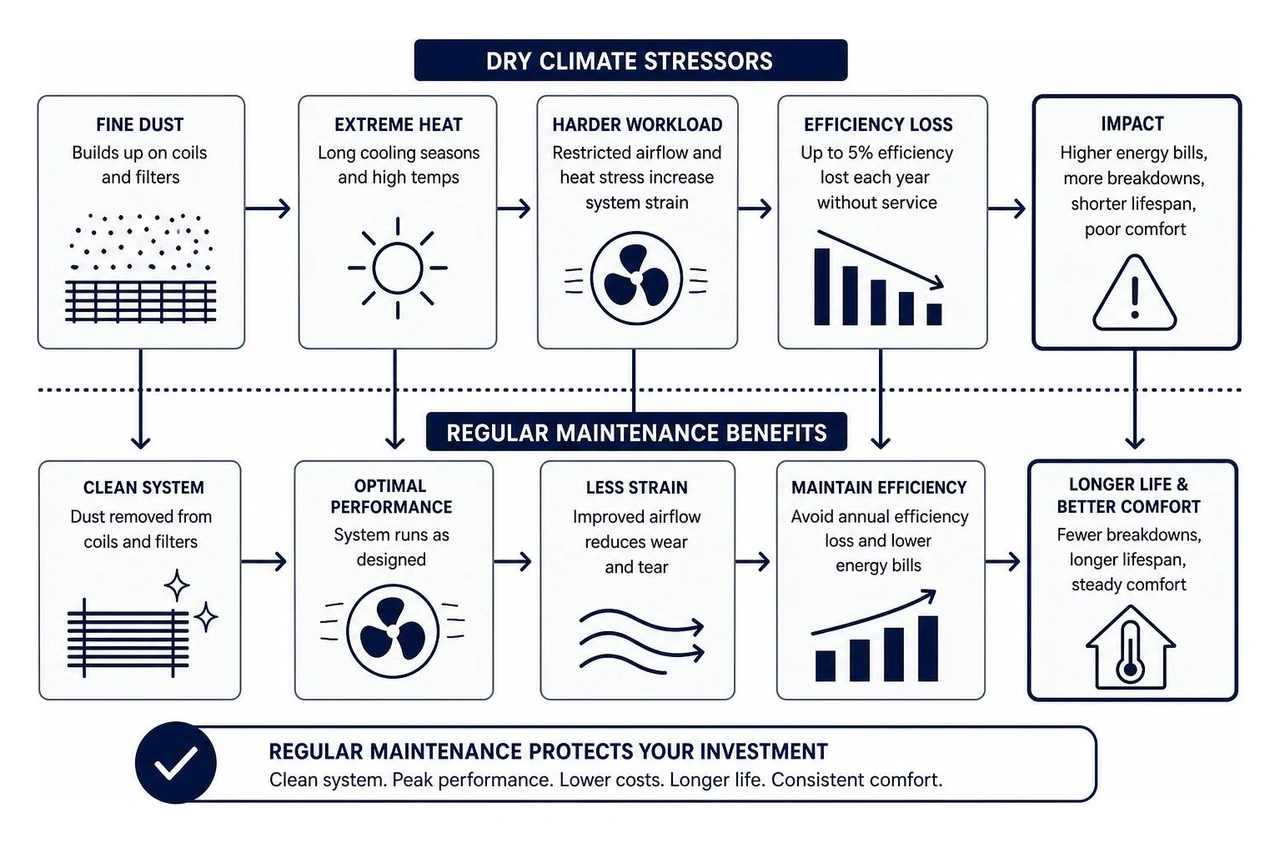
While dry climates save us from the sticky, oppressive humidity found in other parts of the country, they introduce a completely different set of structural and environmental challenges. In locations like Castle Rock, Littleton, and Highlands Ranch, our heating and cooling systems are subjected to constant heat stress, arid winds, and microscopic debris.
When temperatures soar during the peak of summer, your air conditioner often operates for 10 to 14 hours a day. This extended runtime is compounded by how Colorado dry heat affects your cooling system. Because dry air lacks moisture, it has a different thermal capacity than humid air. Your air conditioner must work to reject heat from your home's interior, and any drop in system performance immediately leads to comfort issues.
Furthermore, we must consider high-altitude physics. If you want to understand how altitude affects your HVAC system, it helps to look at air density. In the Denver Metro Area, the air is thinner. Thinner air carries less heat per cubic foot, meaning your blower fans and heat exchangers have to work harder to move the same amount of heating or cooling capacity as a system operating at sea level. When you combine thin air with extreme dry heat, your system is already operating under a natural disadvantage.
One of the most destructive elements in any arid region is the sheer volume of airborne dust and fine silica particles. Unlike humid climates where moisture naturally weighs down dust and keeps it settled, dry climates allow fine particulate matter to remain suspended in the air.
When your HVAC system pulls in air to cycle it through your home, it acts like a giant vacuum cleaner for this dust. If your filtration is compromised, these microscopic silica particles bypass the filter and settle directly onto sensitive internal components.
This creates what we call the "sandpaper effect." As dust settles into the lubricant of motor bearings, fan shafts, and moving pulleys, it mixes with oil to form an abrasive grinding paste. Over time, this paste erodes metal components, increases friction, generates excess heat, and eventually causes fan motors and compressors to burn out prematurely. To keep this abrasive dust out of your system, understanding how often should you change your HVAC air filter is your first line of defense.
Another overlooked stressor in dry, high-altitude climates is extreme thermal cycling. Along the Colorado Front Range, it is entirely common to experience temperature swings of 30 to 40 degrees Fahrenheit within a single 24-hour period. A blistering hot summer afternoon can quickly give way to a crisp, cool mountain evening.
This rapid fluctuation causes the metals within your HVAC system to expand and contract aggressively. Copper refrigerant lines, aluminum condenser fins, and steel brackets are constantly shifting. Over time, this repetitive physical expansion and contraction causes metal fatigue.
The copper joints in your refrigerant lines are particularly vulnerable. This "paperclip effect" — bending metal back and forth until it snaps — can lead to tiny pinhole refrigerant leaks. Even a minor leak can reduce your system's charge. If your refrigerant level is just 10% low, your system can experience up to a 20% drop in operating efficiency, placing immense strain on the compressor.
Investing in regular HVAC maintenance is one of the smartest financial decisions you can make as a homeowner. The harsh environmental factors of arid regions mean that preventative care directly translates to immediate monthly savings and long-term asset protection.
By keeping your system clean, calibrated, and lubricated, you can actively combat the efficiency-draining effects of dust and thermal stress. If you are looking for ways to lower AC bills during Colorado summer, a professional tune-up is the most reliable place to start.
When dust coats your outdoor condenser coils, it acts as an insulating blanket. Your air conditioner cools your home by absorbing heat from indoors and releasing it through the outdoor coils. If those coils are caked in fine dirt and wild mustard or cottonwood fuzz, the heat cannot escape. Your system has to run much longer and consume far more electricity to achieve your desired thermostat setting.
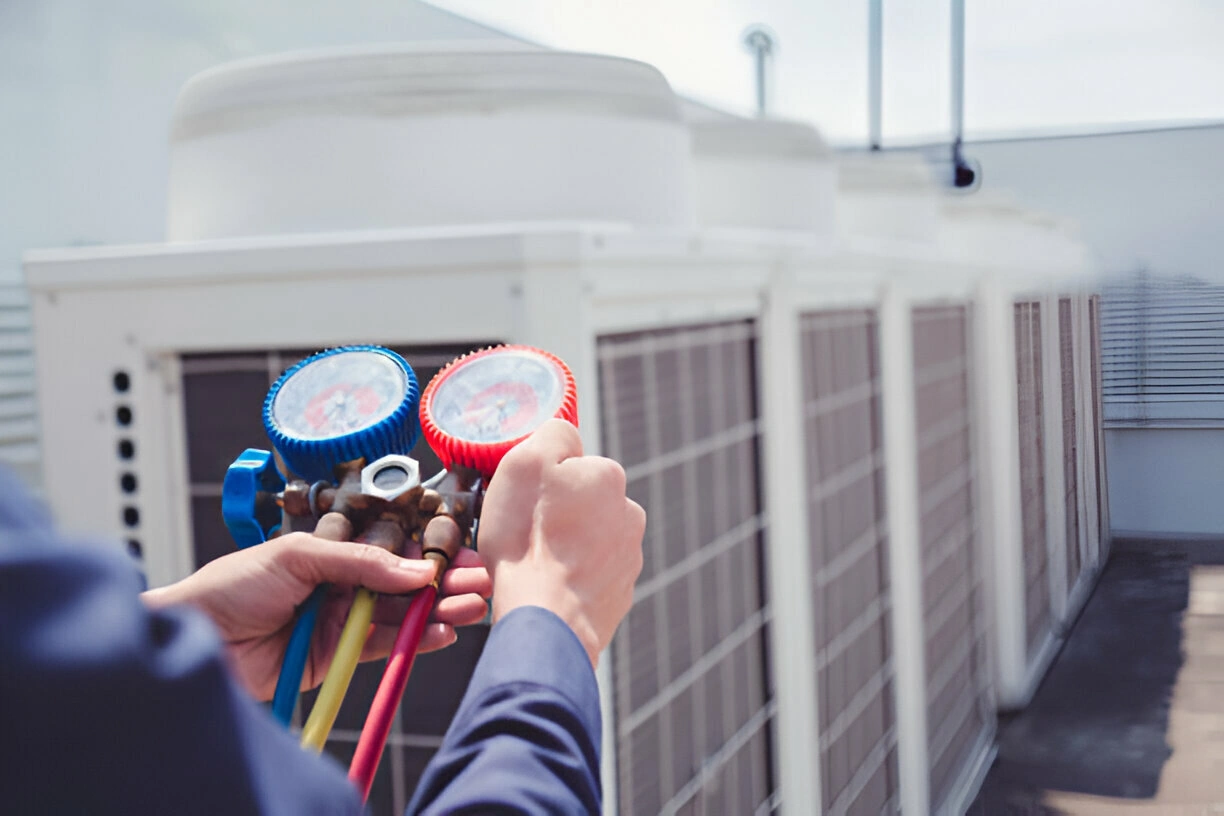
During a professional maintenance visit, technicians perform deep coil cleaning and precise airflow calibration. Removing that layer of insulating dust allows for seamless heat transfer, while calibrating the blower motor ensures optimal air distribution through your ductwork. Taking these steps is one of the most effective summer energy saving tips for Colorado, helping you keep your hard-earned money in your pocket rather than sending it to the utility company.
HVAC systems are major financial investments. In milder climates, a neglected system might limp along for a decade, but in a dry, high-stress environment, lack of maintenance can cause catastrophic failure in as little as 7 to 10 years. Conversely, a well-maintained system can easily provide reliable comfort for 15 to 20 years.
The compressor is the heart of your air conditioning system, and it is also the most expensive component to replace. Routine maintenance protects the compressor by:
By proactively managing these small details, you can easily prevent HVAC emergencies with maintenance, ensuring your system doesn't fail you on the hottest afternoon of the year.
To keep your system operating at peak performance, we recommend a bi-annual maintenance schedule: a cooling-focused tune-up in the spring and a heating-and-humidity-focused checkup in the fall. This seasonal cadence ensures your equipment is fully prepared for the extreme demands of the upcoming season.
| Maintenance Task | Spring Tune-Up (Cooling) | Fall Tune-Up (Heating) |
|---|---|---|
| Condenser Coil Cleaning | Yes (Deep Chemical Clean) | No (Clear Debris Only) |
| Refrigerant Charge Verification | Yes | No |
| Heat Exchanger Integrity Inspection | No | Yes |
| Blower Motor & Fan Lubrication | Yes | Yes |
| Electrical Connection Tightening | Yes | Yes |
| Humidifier Pad & System Check | No | Yes |
| Thermostat Calibration | Yes | Yes |
Before the summer heat waves roll through Denver, Littleton, and Centennial, your air conditioner needs a thorough spring cleaning. The priority during this visit is restoring heat transfer efficiency and verifying electrical safety.
Our technicians focus heavily on the outdoor condenser unit. We perform a specialized coil rinse to flush away the packed-in dust and soil that accumulated over the winter. We also measure the electrical draw of the compressor and fan motor, test the capacitors (the number-one failure point during summer heatwaves), and verify that the refrigerant charge matches factory specifications. For a deeper look at what a comprehensive cooling service entails, check out our AC maintenance Castle Rock CO guide.
As the leaves change and we prepare for freezing winter temperatures, our focus shifts to heating reliability, safety, and moisture control. A dry winter can make your home feel much colder than it actually is, prompting you to crank up the thermostat and burn unnecessary energy.
During the fall service, we perform a meticulous inspection of your furnace's heat exchanger to ensure there are no cracks that could leak dangerous carbon monoxide into your home. We also inspect the ignition system, clean the burners, and pay close attention to your indoor air quality equipment. Because dry air impacts how we perceive temperature, integrating and servicing whole-home humidifiers is a key part of our autumn checklist. To learn more about maximizing your system's performance for winter, explore our heat pump maintenance Castle Rock CO guide and read up on how Colorado dry air affects indoor comfort.
Indoor air quality (IAQ) is a major concern in dry climates. Because there is little moisture to wash the air, outdoor pollutants like dust, pollen, and wildfire smoke remain suspended in the atmosphere for long periods. When you run your heating or cooling system, these pollutants can easily find their way inside, where they recirculate through your living spaces.
During active wildfire seasons, the air quality along the Front Range can drop to hazardous levels. Your HVAC system's filtration system is your home's primary defense against these fine smoke particles and outdoor allergens.
Standard, cheap fiberglass filters do very little to stop microscopic smoke and fine dust. We recommend upgrading to high-quality pleated filters, typically rated between MERV 8 and MERV 11. These filters capture a significantly higher percentage of airborne particles without restricting the airflow of your system in our thin, high-altitude air. During maintenance visits, we inspect the entire duct system for leaks that might be sucking unfiltered air from your attic or crawlspace, and we can recommend advanced air purification upgrades to keep your indoor air fresh and healthy.
Relative humidity levels in Colorado can frequently drop below 20%, especially during the winter when your furnace is running constantly. This ultra-dry air acts like a sponge, pulling moisture out of everything it touches, including your skin, sinuses, wood flooring, and furniture.
Installing and maintaining a whole-home humidifier is the most effective way to combat these dry conditions. These systems integrate directly with your HVAC ductwork to introduce controlled moisture throughout your entire home. Maintaining a healthy humidity range of 30% to 50% offers numerous benefits:
We believe that an informed homeowner is a happy homeowner. Here are answers to some of the most common questions we receive about managing HVAC systems in our unique dry climate.
In dry climates like the Denver Metro Area, you should schedule professional HVAC service twice a year — once in the spring for your air conditioner and once in the fall for your heating system.
While annual service might be sufficient in moderate, humid coastal climates, the extreme dust, high altitude, and intense thermal cycling of Colorado demand a bi-annual cadence to prevent premature system failure. For a complete breakdown of recommended service intervals, consult our HVAC service frequency guide 2026.
You should call a professional technician immediately if you notice any of the following warning signs:
Yes. The vast majority of major HVAC manufacturers (such as Carrier, Trane, and Lennox) explicitly state in their warranty terms that the system must receive regular, documented professional maintenance to keep the parts warranty valid. If a major component like your compressor or heat exchanger fails and you cannot provide service records proving the system was maintained annually, the manufacturer can deny your warranty claim, leaving you responsible for the entire replacement cost.
The benefits of regular HVAC maintenance in dry climates are clear: lower monthly utility bills, a significantly longer equipment lifespan, cleaner indoor air, and the peace of mind that comes from knowing your system is ready to handle whatever the Colorado weather throws its way.
At Colorado Bear Heating & Air, we have over 20 years of experience keeping families comfortable throughout Castle Rock, Littleton, Highlands Ranch, Centennial, and the surrounding Denver Metro communities. Our customer-first approach, transparent communication, and commitment to honest work mean we get the job done right the first time.
Don't wait for the first extreme heatwave or freezing winter storm to find out if your system is up to the task. Schedule your professional service with Colorado Bear Heating & Air today to connect with our friendly, local team!

Get a decision in seconds with no impact to your credit score.


Colorado Bear HVAC is truly the best contractors I have experienced since I moved into my house 30 years ago. I have been dealing with Joe and his crew for over 11 years now. They are a trustworthy, respectful, experienced crew who works with you and gives you a fair value. They just completed a big job replacing my A/C, gas furnace and condenser. They did an excellent job, no short cuts, made sure everything was functional, and cleaned up the area nicely before they left. No pressure to perform unnecessary service. You know when the job is done, you have received top notch professional service at a fair price.


I used Colorado Bear Heating and Air to replace two furnaces in my home. Nate was exceptional to work with. His team did a great job educating me along the way. He provided competitive pricing with 10 year warranties. They installed quickly and were just super great to work with. I’d highly recommend them.

Nate and Sam have been great to work with getting my home humidifier installed in a difficult space in my 1940s house. Their prices were very fair and I would heartily recommend Colorado Bear to anyone looking for a solid HVAC company.
.avif)
Thank you Nate for the promptness you guys gave my parent. They are 93 and can't get around and always getting cold, and I was at work called Nate and he had one of his guys there in like 2 hours which was outstanding my dad was very impressed with the professional and how quick he had it fixed. These guys are great all my family said we found us a new heating and ac company. Colorado Bear Heating & Air you have customers for life!!!! Thank You Again
Carla and the Barnes Family
.avif)
Colorado Bear Heating & Air saved the day! This morning my family and I woke up to frigid outside temperatures(1 degree F)…and no heat! Nate was great over the phone to help me check our furnace, then he sent Sam over to help get us back to warmer temps. They were so quick and helpful. Fortunately I did not have to keep my toddlers inside the house wearing snow suits all day. We are warm now, and so thankful!
.avif)

If you’re in Colorado Springs, The Mountains, or nearby areas, call us to confirm availability for installations.
.avif)